
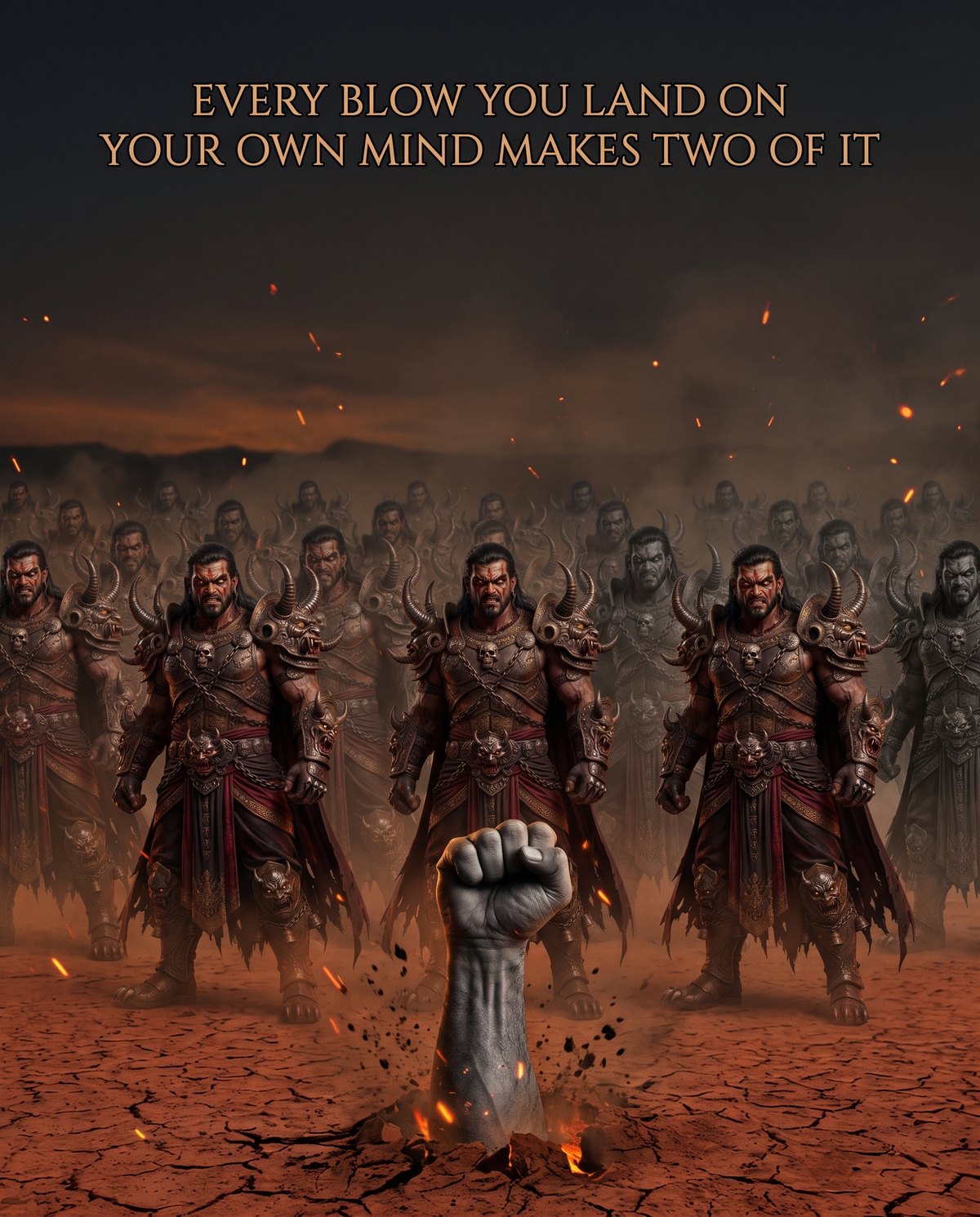
Raktabeej was a demon with a boon: every drop that fell from his body and touched the earth rose again as another Raktabeej, so every blow against him made more of him. In the Devi Mahatmya, Maa Kali ends him by taking every drop into herself before it reaches the ground. Watch the whole story as a 15-minute animated film below.
Maa Kali vs Raktabeej: The Demon Who Could Not Die (2026) · TD Film Studio · 14:55 · Hindi song and narration, Sanskrit mantras, English captions
Where the Raktabeej story comes from
The story of Raktabeej is told in the Devi Mahatmya, also called the Durga Saptashati, a 700-verse scripture of the Goddess inside the Markandeya Purana. Our film follows chapters 7 to 10:
- Chapter 7: Kali is born from Ambika’s brow; Chanda and Munda fall, and the Goddess names Kali Chamunda.
- Chapter 8: the divine Mothers (the Matrikas) join the battle, and Raktabeej arrives.
- Chapters 9 and 10: the demon emperors Nishumbha and Shumbha fall.
The closing image, Kali’s dance ending when her foot comes to rest on Shiva, comes from the Bengali folk tradition of Kali worship. It is not in the Devi Mahatmya, and the film shows it as the tradition tells it.
The story of Raktabeej and Kali, step by step
1. Heaven falls. The demon brothers Shumbha and Nishumbha conquer the three worlds. Their champion is Raktabeej, and his boon makes war meaningless: wound him, and you multiply him. Indra and the devas are driven from heaven, and Shumbha takes the throne.
2. The Goddess answers. Ambika, the Goddess born of the gods’ combined radiance, rides out on her lion. With one roar, her humkara, an army turns to smoke.
3. Kali is born. When the generals Chanda and Munda close in, Ambika’s face darkens with anger, and from her brow comes Kali: dark, fierce, armed with sword and noose. She defeats Chanda and Munda, and Ambika gives her a new name, Chamunda.
4. The Mothers join the war. The shaktis of the gods take form beside the Goddess as the Matrikas, the divine Mothers, each carrying her god’s weapon and mount.
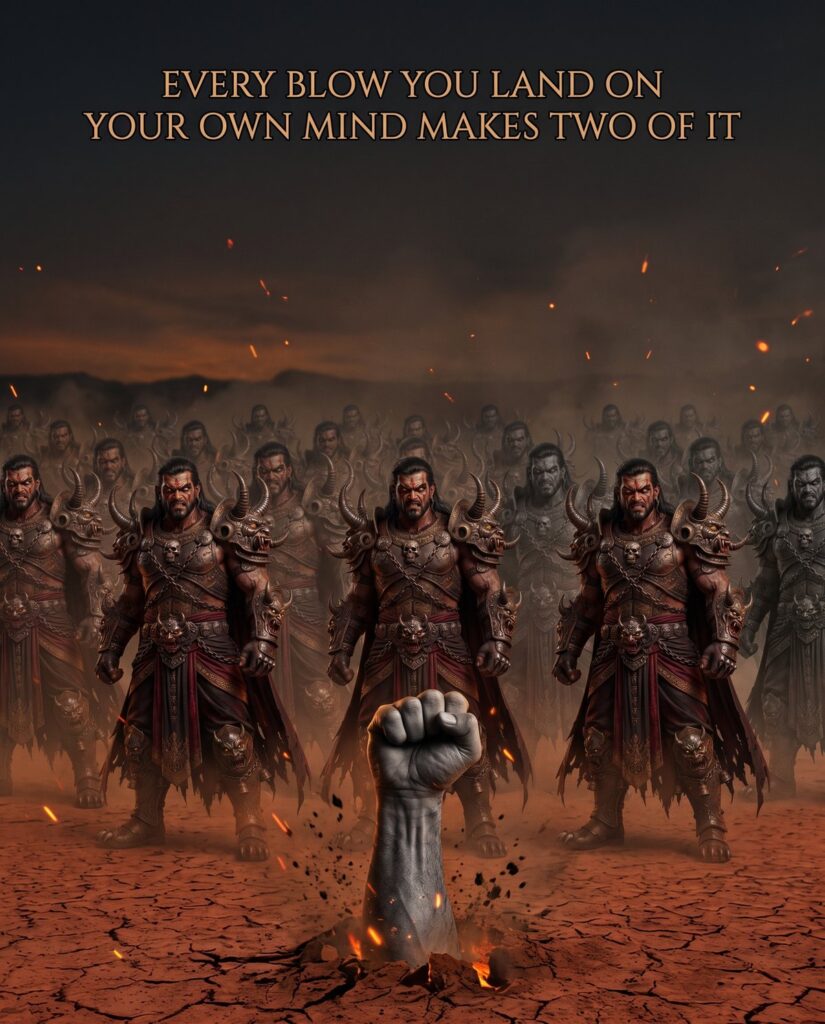
5. The demon who could not die. Raktabeej steps forward. Every strike against him sends drops to the earth, and from each drop another Raktabeej rises, until the battlefield is full of him.
6. The Drinking. The Goddess tells Kali to open her mouth wide. Kali takes every falling drop into herself before it can touch the ground, and the copies have nothing left to rise from. Raktabeej falls. In our film his end is shown as uddhar, liberation, not slaughter.
7. The emperors fall. Nishumbha and then Shumbha face the Goddess and fall. Before the last duel, all the Mothers return into the one Goddess, the scripture’s way of showing they were never separate.
8. The dance and the stillness. In the folk telling, Kali’s victory dance shakes the three worlds until Mahadev walks into her path carrying nothing and lies down. Her foot comes to rest on him, her fury turns to love, and at dawn she raises her palm in the gesture that means fear not.
What the Raktabeej story means
- Raktabeej as the mind’s multiplying desires. Traditional teaching reads each drop as a desire: cut one, and two rise. The answer is not more fighting but taking the root back before it can seed again, which is what Kali does.
- Shumbha and Nishumbha as “I” and “mine”. The demon brothers are often read as ego and possessiveness, the last two things the Goddess removes.
- Fury as protection. The film closes on its narrator’s line: “Fury is not the opposite of love. Fury is the love that stands guard.”
The mantras in the film
- Navarna mantra: ॐ ऐं ह्रीं क्लीं चामुण्डायै विच्चे (Om Aim Hreem Kleem Chamundayai Vichche). It names Chamunda, which is why its chorus plays on the scene where Kali earns that name.
- Kali bija mantra: ॐ क्रीं कालिकायै नमः (Om Kreem Kalikayai Namah)
- Ya Devi Sarvabhuteshu (Devi Mahatmya, chapter 5): या देवी सर्वभूतेषु शक्तिरूपेण संस्थिता। नमस्तस्यै नमस्तस्यै नमस्तस्यै नमो नमः॥
How the film was made
The film began with a song: the Director’s core lyrics came first, and the story was shaped to fit them. Every character was locked on identity plates before a single shot. Seventy-nine shots were storyboarded as 632 frames, and 189 animated clips went into a cut that grew from a five-minute song to a fifteen-minute film. Read the full making-of, stage by stage → · Watch the making-of film →
Film details
- Title: Maa Kali vs Raktabeej: The Demon Who Could Not Die
- Studio: TD Film Studio, Guwahati, Assam, India
- Director, animator and editor; lyrics and music: Tarunabh Dutta
- Assistant director: Himakhi Dutta
- Lead vocals: Hima
- Running time: 14 min 55 s
- Released: 9 October 2026, on YouTube
- Source: Devi Mahatmya (Durga Saptashati), chapters 7–10, and the Bengali folk tradition of Kali and Shiva
▶ Watch the full film on YouTube · More devotional films · DEVI MAA playlist · Jai Maa Kali, the song film
More devotional films: Radha Krishna, Jai Maa Kali, and every film from the studio on the films page.
Frequently asked questions
Who was Raktabeej?
An asura general in the Devi Mahatmya who served the demon emperors Shumbha and Nishumbha. His name means “seed of the drop”: every drop that fell from him and touched the earth became another Raktabeej.
How did Kali defeat Raktabeej?
The Goddess told Kali to open her mouth wide; Kali took in every drop before it reached the ground, so no copy could rise, and Raktabeej fell.
In which chapter of the Durga Saptashati is the Raktabeej story?
Chapter 8 of the Devi Mahatmya. Kali’s birth and the naming of Chamunda come in chapter 7.
Why is Kali called Chamunda?
Because she ended the two generals Chanda and Munda; the Goddess gave her the name after that battle.
Why does Kali stand on Shiva?
In the Bengali folk tradition, Shiva lies in her path to calm her victory dance. When her foot touches him, she recognises him and her fury becomes love. The image is not in the Devi Mahatmya itself.
Is the film suitable for children?
It is a devotional film with intense mythological battle scenes; parental guidance is suggested for very young viewers.
Leave a Reply