Category: Storyteller

“The Storyteller’s Stage: Where Imagination Comes to Life”, on TD Film Studio! Immerse yourself in a diverse collection of engaging narratives, comedic sketches, and unique genre-blending experiments. These articles are perfect for those who enjoy a wide range of storytelling styles and want to experience the creativity and innovation of independent filmmakers.

  • Krishna Flute Bhajan: The Eternal Flute (Shri Krishna Leela)

    Krishna Flute Bhajan: The Eternal Flute (Shri Krishna Leela)

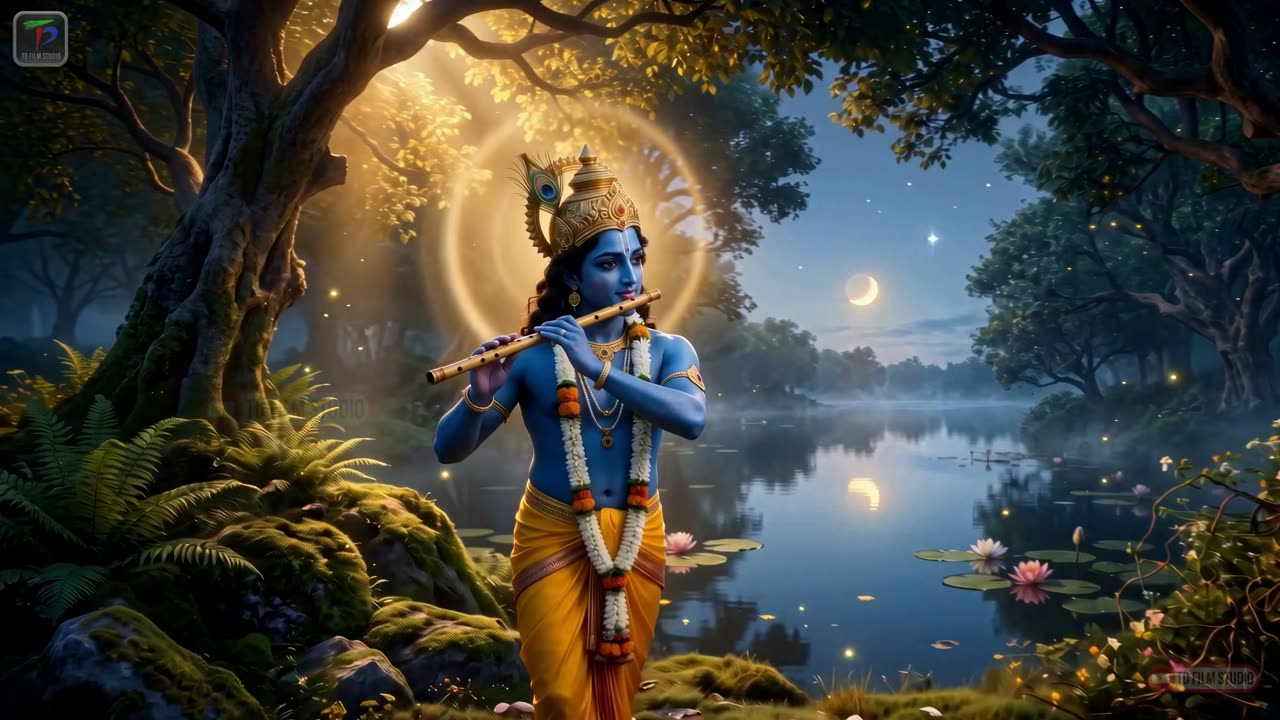
    The Eternal Flute (Shri Krishna Leela) is an original Hindi Krishna flute bhajan, made as a five-and-a-half-minute animated devotional film by TD Film Studio. When Kanha raises his murli, all of Vrindavan falls still, the gopis forget their own names, and Radha’s tear turns to gold. Watch it above, with English subtitles, and see how the film was made below.
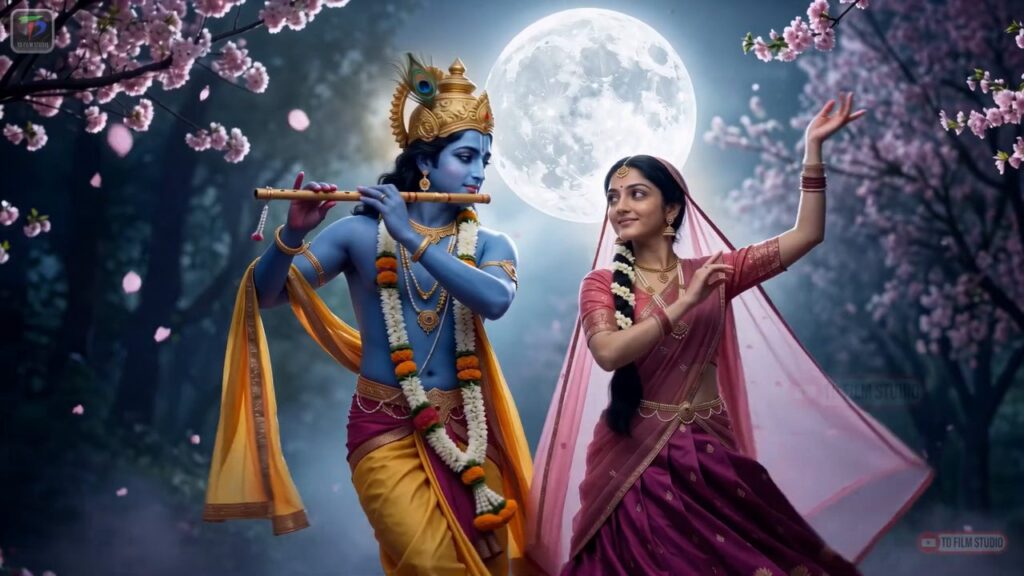
    Krishna flute bhajan The Eternal Flute: Krishna playing the flute as Radha dances under a full moon
    From The Eternal Flute, 1:48.

    The story of the film

    A cowherd lifts a bamboo flute to his lips at sunrise, and the world stops to listen. The Yamuna slows. The deer stand still, every sense forgotten. In the houses of Vrindavan the butter-churn drops, a clay pitcher falls and spills, and the women walk towards a sound they have not yet seen the source of.

    Radha hears it last and stops the longest. A single tear becomes a thread of gold, and without a touch the two are one. The earth and the sky begin to dance, the flute is heard in every heart, and the film closes on a hand holding a flute that nobody is playing.

    This is not a story about desire. It is a story about attention: what happens when something pure enough arrives that everything else briefly stops mattering.

    The source: the Venu Gita of the Bhagavata Purana

    The film is built on the Venu Gita, the Song of the Flute, chapter 21 of the tenth book of the Bhagavata Purana. It comes before the Rasa Lila, so the tradition’s great love story begins not with a meeting but with a sound. We explain the chapter, and why the gopis envied a piece of bamboo, in Venu Gita: why Krishna’s flute is hollow.

    The song and its meaning

    The lyric is original, written in Hindi for this film. Each verse follows the Venu Gita: first nature stops, then the village, then Radha, then the whole cosmos. The teaching arrives in the last lines: a flute makes music only because it is hollow, and a heart emptied of ego becomes the instrument the divine can play.

    Intro: सुन ले / मुरली बुलाए
    Listen… the divine flute calls.

    Verse 1: थमा है जल / रुकी पवन / महक उठा / सारा ये वन
    The streams pause, the winds hold their breath, and a sacred fragrance fills the forest.

    Verse 2: छूटी मथनी / छूटा काम / भूली गोपी / अपना नाम
    The butter-churn drops, the day’s work stops, and the gopi forgets her own name.

    Pre-chorus: खाली बाँस / का ये कमाल / थम गया / वक्त और काल
    This is the miracle of a hollow bamboo: time itself stands still.

    Chorus: खाली जो बाँस / उसी में श्वास / बाजे कान्हा की धुन
    Breath fills only the empty reed, and through it Kanha’s melody plays.

    Verse 3: राधा रुकी / रुका संसार / आँसू बना / सोने का तार
    Radha stands still, the world stands still, and her tear becomes a thread of gold.

    Verse 4: गिरा जो ताज / थमा समाज / मुरली का ही / बचा है राज
    Crowns fall, society falls silent; only the flute’s reign remains.

    Outro: खुद को मिटा / खाली हो जा / बाँस बने तो / बाजेगा स्वर
    Erase yourself, become empty; become the bamboo, and the music will play.

    Chapters

    • 0:00 The flute’s call at sunrise
    • 0:21 Nature awakens: the stilled Yamuna
    • 0:55 The village responds: gopis drop everything
    • 1:11 The wonder of the hollow bamboo
    • 1:30 The heart is drawn to Kanha
    • 2:20 Radha: a tear becomes a thread of gold
    • 2:37 Cosmic Raas: the universe dances
    • 2:53 The flute in every heart
    • 3:10 Final chorus
    • 4:10 Become the empty bamboo

    How the film was made

    The Eternal Flute took nine months and ten stages: research, song, story, design, storyboard, a full stop to review the plan, animation, edit, sound and release. Fifty-five character designs were set aside before one was kept, twenty-two shots were struck in a single night, and fifty-eight shots reached the final film. It is AI-assisted animation, directed by a human. Read the whole process in how to make an animated film, shot by shot.

    Film details

    • Title: Shri Krishna Leela: The Eternal Flute
    • Runtime: 5 minutes 35 seconds
    • Language: Hindi, with English subtitles
    • Released: 22 August 2026
    • Written, directed, animated and edited by: Tarunabh Dutta, who also wrote the lyrics and music
    • Assistant director: Himakhi Dutta
    • Studio: TD Film Studio, Guwahati, Assam, India
    • IMDb: tt44743346

    More devotional films

    See Radha Krishna, the twenty-one-minute love story, Maa Kali vs Raktabeej, every devotional film on Hindu mythology animated films, and the whole studio catalogue on our films page.

    Frequently asked questions

    What is The Eternal Flute about?

    Krishna lifts his flute at dusk and the world stops to listen: the Yamuna stills, the deer forget to chew, the gopis forget their own names, and Radha’s tear turns to a thread of gold. It ends on one teaching: become the empty bamboo.

    Is The Eternal Flute a Krishna bhajan?

    Yes. It is an original Hindi Radha Krishna bhajan, with original lyrics and music, made as an animated devotional song-film with English subtitles.

    Which scripture is the film based on?

    The Venu Gita, the Song of the Flute, in the tenth book of the Bhagavata Purana. The lyric is original, written for this film. The scripture itself is explained in why Krishna’s flute is hollow.

    Why is Krishna’s flute hollow, and what does the song mean?

    A flute makes music only because it is empty. The song’s last lines ask the listener to do the same: let go of the ego, become the hollow reed, and let the divine breath play through you.

    How was The Eternal Flute made?

    It is AI-assisted animation, directed by a human, made over nine months in ten stages, with fifty-eight shots in the final film. The making-of film and the full breakdown show every decision.
  • Who Wrote the Bhagavad Gita? Vyasa, Ganesha and the Text

    Who Wrote the Bhagavad Gita? Vyasa, Ganesha and the Text

    The Bhagavad Gita was composed by the sage Ved Vyasa as part of the Mahabharata, the epic he is credited with authoring. Its words are the teaching of Lord Krishna to the warrior Arjuna on the battlefield of Kurukshetra. According to tradition, Lord Ganesha wrote the Mahabharata down as Vyasa dictated it.

    So the Gita has three “authors”, each in a different sense: Krishna, who spoke it; Vyasa, who composed the epic that holds it; and Ganesha, who, in the famous story, wrote it down. Here is how the three fit together, and what scholars say about when the text took shape.

    Watch: the life of the one who spoke the Gita: Shri Krishna’s Entire Life in a Captivating Animated Song, by TD Film Studio.

    Krishna speaking to Arjuna on the chariot at Kurukshetra at dawn, the Bhagavad Gita scene recorded in the Mahabharata
    Image generated with AI for TD Film Studio.

    Krishna spoke it, Arjuna heard it

    The Bhagavad Gita, “the Song of the Lord”, is a conversation. On the morning of the great war, Arjuna sees his teachers, cousins and elders lined up against him and lays down his bow, unable to fight. Krishna, serving as his charioteer, answers his despair. Over 18 chapters he speaks of duty (dharma), action without attachment to its fruits (karma yoga), knowledge (jnana) and devotion (bhakti). He ends by revealing his universal form.

    In this sense the teaching is Krishna’s. Devotees regard the Gita as the direct word of God, which is why it is often called the essence of the Vedas.

    Vyasa composed the Mahabharata that holds the Gita

    The Gita is not a separate book in its origin. It forms chapters 23 to 40 of the Bhishma Parva, the sixth of the Mahabharata’s eighteen books (in the Critical Edition). Tradition names the sage Krishna Dvaipayana Vyasa as the composer of the whole epic, and so of the Gita within it.

    Vyasa is also a character in his own story: the grandfather of both the Pandavas and the Kauravas, and the sage credited with arranging the Vedas. In the epic, Vyasa gives the charioteer Sanjaya divine sight so that he can see the distant battlefield and narrate the war, and the Gita, to the blind king Dhritarashtra. That is why the Gita opens with Dhritarashtra asking Sanjaya, “What did my sons and the sons of Pandu do, gathered at Kurukshetra?”

    Ganesha wrote it down

    The most loved part of the story comes from a passage in the Mahabharata’s first book, the Adi Parva, found in many versions of the epic. Vyasa needed a scribe who could keep pace with his composition, and he asked Ganesha. Ganesha agreed on one condition: Vyasa must dictate without ever pausing. Vyasa agreed with a condition of his own: Ganesha must understand every verse before writing it.

    Whenever Vyasa needed time to compose, he spoke a verse so complex that Ganesha had to stop and think. In some tellings, when his pen broke, Ganesha snapped off one of his own tusks and kept writing. That is why he is often shown with a broken tusk.

    How many verses and chapters are in the Bhagavad Gita?

    The Gita has 18 chapters and 700 verses (shlokas) in its standard form. Most verses are in the anushtubh metre, the same metre as most of the Mahabharata.

    When was the Bhagavad Gita written?

    There are two answers, and both are worth knowing.

    • Tradition places the Kurukshetra war at the end of the Dvapara Yuga. The beginning of the Kali Yuga is traditionally reckoned at 3102 BCE.
    • Scholars date the composition of the Gita as we have it to roughly the 2nd century BCE to the 2nd century CE, as part of the long growth of the Mahabharata, which drew on much older oral tradition.

    The Gita’s influence needs no date: it has been commented on by Adi Shankaracharya, Ramanujacharya and Madhvacharya, translated into English by Charles Wilkins in 1785, and read by thinkers from Mahatma Gandhi to Henry David Thoreau.


    Watch Krishna’s story

    TD Film Studio tells India’s sacred stories as animated cinema. Shri Krishna’s Entire Life in a Captivating Animated Song has been watched more than 1.5 million times, and Radha Krishna: The Ultimate Divine Love Story tells their love as a cinematic short.

    Frequently asked questions

    Who is the author of the Bhagavad Gita?

    The sage Ved Vyasa is credited with composing it as part of the Mahabharata. The teaching itself is spoken by Lord Krishna to Arjuna, and tradition says Lord Ganesha wrote the epic down as Vyasa dictated.

    Did Krishna write the Bhagavad Gita?

    Krishna spoke the teaching; he did not write it down. It was composed in verse by Vyasa within the Mahabharata and narrated in the epic by Sanjaya.

    Which part of the Mahabharata is the Bhagavad Gita?

    It is in the Bhishma Parva, the sixth book of the Mahabharata: chapters 23 to 40 in the Critical Edition.

    How many shlokas are in the Bhagavad Gita?

    Seven hundred, across 18 chapters.


    Sources: the Mahabharata, Bhishma Parva and Adi Parva (Critical Edition, Bhandarkar Oriental Research Institute); Bhagavad Gita on Wikipedia; Encyclopaedia Britannica, “Bhagavadgita”.

  • Who Wrote the Panchatantra? Vishnu Sharma and His Fables

    Who Wrote the Panchatantra? Vishnu Sharma and His Fables

    The Panchatantra is traditionally credited to Vishnu Sharma, an old and wise teacher who, according to the book’s own opening story, composed it to educate three dull princes in six months. Scholars date the collection to roughly the 3rd century BCE–3rd century CE, written in Sanskrit, and it became one of the most translated books in the world.

    Its animals still talk to children everywhere: the clever rabbit who outwits a lion, the monkey who escapes a crocodile, the tortoise who could not keep quiet. Here is who wrote it, why, and how its fables travelled from ancient India across the world.

    Who wrote the Panchatantra: an old scholar telling animal fables to three young princes under a banyan tree in ancient India
    Image generated with AI for TD Film Studio.

    Who was Vishnu Sharma?

    Almost everything we know about Vishnu Sharma comes from the frame story that opens the Panchatantra itself.

    King Amarashakti of the city of Mahilaropya had three sons who refused to learn. Worried for his kingdom, he called his ministers, who named the scholar Vishnu Sharma. The old teacher, said to be eighty years old, made the king a famous promise: he would make the princes wise in the ways of the world in six months, or give up his own name.

    He kept the promise not with lectures but with stories. Tale inside tale, animals argue, plot, trust and betray one another, and each story ends with a lesson about how to live and how to rule. That art of wise and practical living is called niti.

    Whether Vishnu Sharma was a single historical person or a name given to a long tradition of storytellers, no one can prove. What is certain is that the book that carries his name has outlived every king it was written for.

    What does “Panchatantra” mean?

    Pancha means five and tantra here means a book or a treatise: “the five books”. Each book has its own theme:

    1. Mitra-bheda, the loss of friends: how a false friend can turn allies against each other (the lion and the bull, set apart by a scheming jackal).
    2. Mitra-samprapti, the winning of friends: how the weak survive by helping one another (the crow, the mouse, the tortoise and the deer).
    3. Kakolukiyam, of crows and owls: war, spies and the danger of trusting an enemy.
    4. Labdhapranasham, losing what you have gained: the monkey and the crocodile, and how quick wits save your life.
    5. Aparikshitakarakam, rash actions: the brahmin and the mongoose, and the price of acting before thinking.

    When was the Panchatantra written?

    There is no exact date. Most scholars place the original Sanskrit composition somewhere between about 200 BCE and 300 CE, drawing on even older oral fables. The original text is lost; what survives are many later versions and retellings, in India and abroad.

    How the Panchatantra travelled the world

    Few books have journeyed as far.

    • In the 6th century, a Persian physician named Burzoy translated it into Middle Persian (Pahlavi) for the court of the Sasanian king Khosrow I.
    • In the 8th century, Ibn al-Muqaffa turned that version into Arabic as Kalila wa Dimna, named after the two jackals of the first book. It became a classic of Arabic prose.
    • From Arabic it passed into Greek, Hebrew, Latin, Spanish, German and dozens more languages over the following centuries.
    • In 17th-century France, Jean de La Fontaine acknowledged an Indian sage, “Pilpay”, as a source for some of his famous fables.

    By some counts it exists in more than 200 versions in over 50 languages. A collection written to teach three princes in one Indian city became part of the storytelling of half the world.

    Famous Panchatantra stories children still love

    • The Lion and the Clever Rabbit: a small rabbit tricks a cruel lion into leaping at his own reflection in a well.
    • The Monkey and the Crocodile: a monkey escapes with a quick lie when the crocodile reveals he wants the monkey’s heart.
    • The Tortoise and the Geese: a tortoise who cannot stop talking falls from the sky.
    • The Brahmin and the Mongoose: a loyal mongoose is killed by a man who did not stop to look.
    • The Blue Jackal: a jackal dyed blue pretends to be a king until his own howl betrays him.

    Each one ends with a line of wisdom the princes, and every child since, can carry: think before you act, choose friends with care, and let wit defeat strength.

    Why the Panchatantra still matters for children

    The Panchatantra is the ancestor of the moral story. Its animals are not cute decorations: they are mirrors of people, and its lessons are about real life, about friendship, trust, greed and courage. That is why parents and teachers still choose these fables at bedtime, and why they work so well as animated films: every story is short, visual and ends with a clear lesson.


    Fairy tales and fables from Learn With TD

    On our children’s channel, Learn With TD, we tell the world’s classic stories as animated films for families: Cinderella, Sleeping Beauty and Little Red Riding Hood, with more classic tales and fables to come.

    Frequently asked questions

    Who is the author of the Panchatantra?

    The Panchatantra is traditionally credited to Vishnu Sharma, a scholar who, in the book’s opening story, used these fables to teach three princes the art of wise living in six months.

    In which language was the Panchatantra written?

    It was originally written in Sanskrit, and later translated into Persian, Arabic and many other languages.

    How many books are in the Panchatantra?

    Five, which is what its name means: the loss of friends, the winning of friends, crows and owls, losing what you have gained, and rash actions.

    What is the moral of the Panchatantra?

    Each story carries its own lesson, but together they teach niti: practical wisdom about friendship, trust, caution and using intelligence rather than force.


    Sources: Patrick Olivelle, trans., Pañcatantra: The Book of India’s Folk Wisdom (Oxford World’s Classics); Panchatantra on Wikipedia; Encyclopaedia Britannica, “Panchatantra”.

  • Kamakhya Devi: Who She Is and Why She Is Worshipped

    Kamakhya Devi: Who She Is and Why She Is Worshipped

    Kamakhya Devi is the goddess of the Kamakhya Temple on Nilachal Hill in Guwahati, Assam, one of the most sacred of the Shakti Peethas. She is Shakti as the source of creation itself. In her sanctum there is no idol: devotees worship a natural rock in the shape of a yoni, the womb, kept wet by an underground spring.

    That single fact explains most of what people ask about her. Kamakhya is not worshipped as a figure with a face and arms but as the creative power that every face and form comes from. Below are her story, her temple, the festival that closes her doors for three days every June, and what she means to the people who climb Nilachal Hill to see her.

    Watch: footage of Kamakhya Temple and Nilachal Hill, filmed by TD Film Studio in Guwahati.

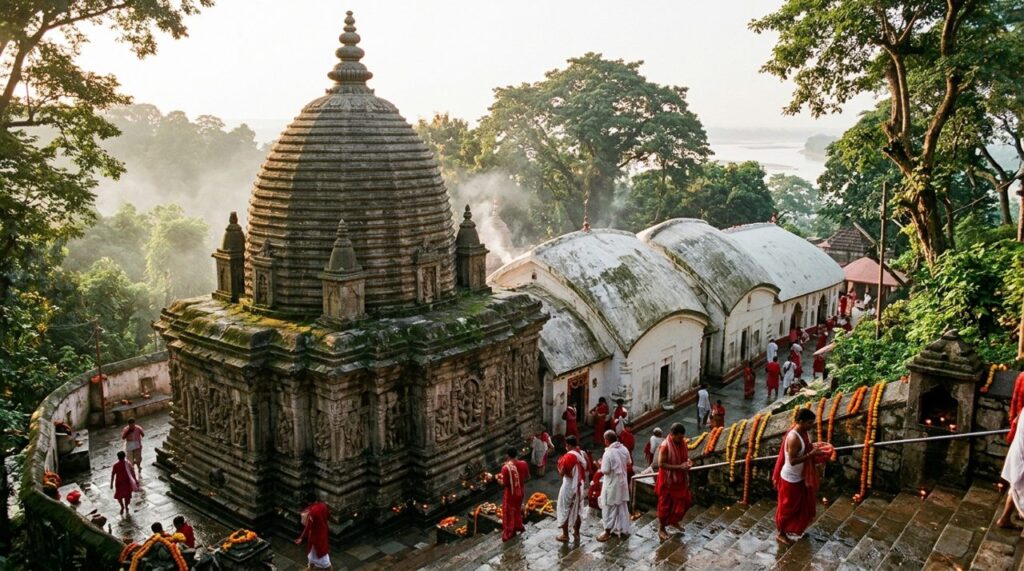
    Kamakhya Devi temple with its beehive dome on Nilachal hill above the Brahmaputra, pilgrims climbing the steps at dawn
    Image generated with AI for TD Film Studio.

    Who is Kamakhya Devi?

    Kamakhya is a form of the Great Goddess, Mahadevi, worshipped in the Shakta tradition as the giver of desire and its fulfilment. Her name is usually read as “the goddess whose name is desire” or “she who grants wishes”: kama means desire, and the whole region around her hill was called Kamarupa, “the land where Kama regained his form”.

    In the temple she is identified with Tripura Sundari, the most beautiful of the ten Mahavidyas, the ten wisdom goddesses of the Shakta tradition. The other Mahavidyas, among them Kali, Tara, Bhuvaneshwari and Chhinnamasta, have their own shrines around her on Nilachal Hill. That is why Kamakhya is often described as the meeting place of all the forms of the Devi.

    The story of Kamakhya Devi: where Sati’s body fell

    Kamakhya’s story begins with Sati, the first wife of Shiva and daughter of King Daksha.

    Daksha held a great sacrifice and invited every god except his son-in-law. Sati went to her father’s sacrifice uninvited, and when Daksha insulted Shiva before the assembled gods, she gave up her body in her own yogic fire.

    Shiva arrived and lifted her body. Carrying it, he began the Tandava, the dance of destruction, and the worlds began to shake. To end his grief and save creation, Vishnu released his Sudarshana Chakra, which divided Sati’s body. Wherever a part of her fell, the earth became holy: these are the Shakti Peethas, the seats of the Goddess, traditionally counted as 51.

    According to the Kalika Purana, the text most closely tied to Kamakhya, Sati’s yoni fell on Nilachal Hill. That is why the sanctum holds no statue: the Goddess is present there as the source of birth itself.

    The same text tells how Kama, the god of love, had been burned to ash by Shiva’s third eye and regained his body at this place. Kamarupa, the old name of this land, keeps that memory.

    Watch: the Devi in her fiercest form. Maa Kali vs Raktabeej, TD Film Studio’s animated Mahakali movie from the Devi Mahatmya.

    Kamakhya Devi Mandir: the temple on Nilachal Hill

    The Kamakhya Devi Mandir stands on Nilachal Hill in the western part of Guwahati, above the Brahmaputra. Local tradition credits its first temple to the legendary king Naraka of Pragjyotisha, the ancient kingdom of this land. The temple standing today was rebuilt in 1565, under the Koch king Naranarayana and his brother, the general Chilarai. The Ahom kings later added to it and endowed it.

    Its shape is unlike temples elsewhere in India. Historians call it the Nilachal style: a beehive-like dome rising over a cruciform base, with sculpted panels set into the walls. From the outer halls, steps lead down into the garbhagriha, a dark, cave-like chamber. There, in the stone floor, is the yoni-shaped rock, covered in red cloth and flowers and wet from the spring beneath it.

    Is there a murti (idol) of Kamakhya Devi?

    Not in the sanctum. This is why searches for a “Kamakhya Devi photo” or “Kamakhya Devi murti” often find pictures of a decorated metal image of the goddess carried in festivals, or a painted form, rather than the sanctum. The sanctum itself is the stone and the spring. Photography inside it is not permitted.

    Ambubachi Mela: why the temple closes for three days

    Every year in June, during the monsoon month of Ahaar (Asadha), the temple closes for three days for the Ambubachi Mela. Devotees believe that in these days the Goddess, like the earth itself in the rains, goes through her annual cycle of menstruation. No worship is offered, farming pauses in many Assamese villages, and on the fourth day the doors reopen to enormous crowds.

    The blessing most sought at Ambubachi is a piece of red cloth from the sanctum, the angabastra, which devotees keep as protection.

    Ambubachi is one of the largest religious gatherings in eastern India. Pilgrims, householders and ascetics from across the country camp on the hill. The exact dates follow the calendar each year, so check the temple trust’s announcements before planning a visit.

    Kamakhya’s other great festivals include Durga Puja and the spring Vasanti Puja. In those weeks the hill fills with the sound of drums and conch shells.

    Why Kamakhya Devi is worshipped

    Kamakhya is worshipped for three reasons, which together explain why she draws people from every part of India and beyond.

    1. She is the source. Most temples honour the Goddess in a form. Kamakhya honours the power that creates all forms. Worshipping her is worshipping life, fertility and creation at their root.
    2. She fulfils sincere wishes. Families come to pray for children, for marriages, for health and for courage in hard times. The name Kamakhya promises that desire, offered to the Goddess, can be fulfilled.
    3. She is the heart of the Shakta tradition. Kamakhya has been one of India’s great centres of tantric and Shakta practice for more than a thousand years. Here the Goddess is the highest reality, not a consort.

    For the people of Assam she is also something simpler: the mother on the hill, visible from much of Guwahati, whose blessing is sought before weddings, exams, journeys and new beginnings.

    Kamakhya Devi mantra

    Devotees chant many mantras to Kamakhya. A widely recited short prayer is “Om Kamakhyayai Namah” (“salutations to Kamakhya”). It is chanted with a calm mind, and many devotees repeat it 108 times on a mala.

    Visiting Kamakhya Devi for darshan

    Kamakhya Temple is about 8 km from central Guwahati and is reached by road up Nilachal Hill. The queue for darshan of the sanctum can take many hours, especially on festival days. The temple trust offers special darshan tickets, and its official site publishes the current timings and rules. Dress modestly, carry as little as possible, and expect to descend into the sanctum barefoot over wet stone.


    About the films on this page

    TD Film Studio is a film and animation studio based in Guwahati, a few kilometres from Nilachal Hill. We make animated devotional films that tell India’s sacred stories as cinema, from Maa Kali vs Raktabeej and Jai Maa Kali to Shri Krishna’s Entire Life and Lord Shiva Story.

    Frequently asked questions

    What is the story of Kamakhya Devi?

    When Sati gave up her body at Daksha’s sacrifice, Shiva carried it in grief until Vishnu’s Sudarshana Chakra divided it. According to the Kalika Purana, her yoni fell on Nilachal Hill in Guwahati, which became the Kamakhya Shakti Peetha.

    Why is there no idol in the Kamakhya Devi temple?

    The Goddess is worshipped as a natural yoni-shaped rock, kept wet by an underground spring, in a cave-like sanctum. She is honoured as the source of creation rather than in a sculpted form.

    Why does Kamakhya Temple close during Ambubachi?

    For three days each June, devotees believe the Goddess goes through her annual menstruation, as the earth does in the monsoon. The temple reopens on the fourth day for the Ambubachi Mela.

    What does “Jai Maa Kamakhya” mean?

    It means “Victory to Mother Kamakhya”. It is the greeting and prayer devotees call out on Nilachal Hill.

    Where is Kamakhya Devi temple?

    On Nilachal Hill in the west of Guwahati, Assam, India, above the Brahmaputra river.


    Sources: the Kalika Purana; the Kamakhya Temple trust (maakamakhya.org); Kamakhya Temple and Ambubachi Mela on Wikipedia.

  • Amar Cotton College: An Assamese Song for Every Cottonian

    Amar Cotton College: An Assamese Song for Every Cottonian

    Amar Cotton College (“Our Cotton College”) is an Assamese song for every Cottonian: a tribute to Cotton College, today Cotton University, Guwahati, from the batch of 2001 to 2003. In the film, a falling xewali blossom opens a door into memory, and the campus fills again with its students, folded in paper, across three generations.

    Amar Cotton College (2026) · TD Film Studio · song 4:46 · Assamese, with Assamese subtitles · premieres on YouTube on 1 November 2026, 9:30 PM IST

    Behind the scenes: hours before the premiere, six Cottonians went back to the campus to relive their college days. Watch the behind-the-scenes film on YouTube.

    Papercraft students outside the Cotton College building in Guwahati, a frame from the Assamese song Amar Cotton College
    From the Amar Cotton College music video.

    What the song is about

    Every Cottonian carries a version of the same morning: the river at dawn, the walk under the centenary arch, tea in the canteen, the library going quiet in the afternoon. The song is about that morning, and about a promise. Twenty-five years after a batch leaves, it is scattered across the world, and the song says the distance cannot erase the bond.

    The film tells it as one day. On the morning of his batch’s twenty-fifth reunion, a man walks back through the gate with a shoebox of old photographs. Wherever a falling xewali (the night jasmine of Assam) lands, the memory of that place returns: the canteen, the chemistry laboratory, Bihu on the lawn, the rain on the corridors. By the final chorus, the friend he has not seen in twenty-five years walks in beside him, and the whole batch fills the gate again.

    The song’s answer to its own question, whether a place keeps its people after they leave, is one word in the chorus: চিৰ’সেউজ, evergreen.

    The lyrics in English

    The sung Assamese is the song. These are the meanings of each verse, line by line, so that anyone can follow it.

    The chorus

    আমাৰ কটন কলেজ
    চিৰ’সেউজ কটন কলেজ
    স্মৃতিৰ পাতত সজোৱা
    পুৰণি দিন’ৰে গান

    • Our Cotton College, evergreen Cotton College: a song of old days, arranged on the pages of memory.
    • On the padduli of Cotton College we wrote the song of life: the padduli is the entrance path of an Assamese home, so the college is called home.
    • In the heart it burns forever: a life full of the hope of dreams.

    The verses

    • Verse 1, the river: golden days on the bank of the Luit (the Brahmaputra); sitting in the shade of the kopahi, the cotton tree, a play on the college’s own name; young hopes shimmering on the path of colourful dreams; sweet laughter that still rings in every memory, and old words that come back in every lonely moment.
    • Verse 2, heritage: sitting together in the shade of the century-old tree; racing through youth in the bustle of Panbazar; the madness of golden young days, joy and pain mixed together; the proud saga of heritage.
    • Verse 3, our years: from 2001 to 2003, Arts and Science meeting under one sky; searching for the fount of knowledge; the sweet bond of culture; every formula carrying the stamp of our excitement.
    • Verse 4, far away: today we are scattered across the world, and twenty-five years of distance cannot erase this bond; cultural life blossoming on the stage of KBR Hall (Kalaguru Bishnu Rabha Hall); a thousand dreams over canteen tea.
    • Verse 5, the seasons: the path to the morning classroom wrapped in the dew of Aghon; building the road ahead in the silence of the library; the cool wind from the Nilachal hills; the rain turning the campus green, drop by drop.
    • Verse 6, the future: hearts swaying with the palash flowers of Phagun; creative dreams printed in the Cottonian, the college magazine; finding life’s direction in our teachers’ loving advice; building a new future with Cottonian pride.

    Cotton College, from 1901 to Cotton University

    The song is set on one of the oldest campuses of higher education in North-East India. A few facts behind its lines:

    • 1899: Manik Chandra Baruah wrote to the government asking for a college in Guwahati, and on 3 November 1899 Sir Henry Stedman Cotton, Chief Commissioner of Assam, announced that one would open.
    • 27 May 1901: Cotton College, named by the public after him, was inaugurated with five professors and 39 students. Its first principal was Frederick William Sudmerson.
    • 1948: after years of affiliation to the University of Calcutta, it became a constituent college of the new Gauhati University.
    • 2001: the college’s centenary. The centenary arch (1901 · 2001) that opens and closes the film was new when our batch walked under it.
    • 2017: the Cotton University Act, passed by the Assam Legislative Assembly on 2 March 2017, merged the college and Cotton College State University into Cotton University.
    • The campus: about 40 acres in Panbazar, by Dighalipukhuri and close to the Brahmaputra, the places the song names.

    Sources: Cotton University and Sir Henry Cotton (Wikipedia), and Cotton University’s own website.

    Papercraft people in a real campus

    The film had one rule: show the real campus, and never put a real person’s face on screen. So the places are photographic, rebuilt from our own photographs of the campus, and every person is a folded-paper figure. They feel like us, but they are nobody’s exact face.

    The paper is the clock. It tells you which year you are in before the clothes do:

    • The 1970s, the legacy: aged ivory paper, in the warm colours of old slides.
    • 2001 to 2003, our memory: bright, crisp craft paper in golden daylight and monsoon green.
    • 2026, today: heavier card, worn at the edges, with silver paper at the temples.

    In the second instrumental break, one porch is shown in all three eras, one after another, each arriving on a falling flower. It is the song’s word, evergreen, made into a picture.

    How the film was made

    Every scene began with one of our own photographs of the campus from 2001 to 2003. Each place was rebuilt as a clean, empty photographic plate; the characters were designed once and dressed in our own clothes of those years; and every frame was written and directed shot by shot, then brought to motion with AI animation. In all: 104 location plates, 20 character and prop sheets, 116 storyboard frames and 97 video clips.

    Song details

    • Title: Amar Cotton College (আমাৰ কটন কলেজ)
    • Sung by: Jishnu Baruah and Jyotismita Baishya
    • Lyrics, music, direction and animation: Tarunabh Dutta
    • Assisted by: Himakhi Dutta
    • Special thanks: Mrs. Gita Saikia Bharali, Rimly Bhuyan
    • Studio: TD Film Studio, Guwahati, Assam
    • Language: Assamese
    • Length: 4 min 46 s (the song), followed by the end credits
    • Released: 1 November 2026, as a YouTube premiere

    ▶ Watch on YouTube · More Assamese songs · Music and music videos · অসমীয়া

    Other making-of films from the studio: the making of Maa Kali vs Raktabeej, the making of Radha Krishna and the making of The Eternal Flute.


    Frequently asked questions

    What does “Amar Cotton College” mean?

    It is Assamese for “Our Cotton College”. The chorus calls the college চিৰ’সেউজ, evergreen: the same place, young again with every new batch.

    Who sang Amar Cotton College?

    Jishnu Baruah and Jyotismita Baishya. The lyrics and music were written at TD Film Studio, Guwahati.

    Where can I read the lyrics?

    The full Assamese lyrics are in the YouTube description of the music video, and the English meaning of every verse is on this page. The video also has Assamese subtitles.

    When was Cotton College founded?

    Cotton College was inaugurated in Guwahati on 27 May 1901, named after Sir Henry Stedman Cotton, then Chief Commissioner of Assam. It became Cotton University under the Cotton University Act, 2017.

    Is Cotton College the same as Cotton University?

    Yes. Cotton College and Cotton College State University were merged into Cotton University in 2017, on the same campus in Panbazar, Guwahati.

    Was the music video made with AI?

    The pictures and motion were made with AI animation tools, directed shot by shot. The song, the story, the storyboard and the edit were made by people, and the video carries YouTube’s altered-content label. The making-of shows every stage.

    Are real people shown in the film?

    No. Every person in the music video is a papercraft character, so no classmate’s face appears. Only the places are photographic.

  • Who Was Zubeen Garg? His Life, His Songs and the Ten Principles He Lived By

    Who Was Zubeen Garg? His Life, His Songs and the Ten Principles He Lived By

    Who was Zubeen Garg? Zubeen Garg (18 November 1972 – September 2025) was a singer, composer, actor, film director and poet from Assam, India. Born Zubeen Borthakur in Tura, Meghalaya, he sang tens of thousands of songs in Assamese, Hindi, Bengali and dozens of other languages. He became known across India for “Ya Ali” (2006), and in Assam he was loved simply as Zubeen Da.

    He began singing at three. He spent eleven years at the tabla. And he refused, all his life, to belong to anyone who could own him. This article tells his life in brief, sets out what he believed in his own words, and lists the ten principles he lived by.

    Watch: Zubeen Garg Biography | Zubeen Da’s 10 Rules for a Fearless Life, a seven-minute animated film by TD Film Studio, in English or with a full Assamese voice track.

    Who was Zubeen Garg: an ink portrait with a gamosa beside the Brahmaputra, a frame from TD Film Studio's animated biography
    From our animated biography of Zubeen Garg.

    Zubeen Garg: quick facts

    Born18 November 1972, Tura, Meghalaya
    Birth nameZubeen Borthakur. He was named after the conductor Zubin Mehta; “Garg” came from his gotra
    Known asZubeen Da, Goldie, the King of Humming
    TrainingSinging from age three, with his mother as his first teacher; eleven years of tabla under Pandit Robin Banerjee; Assamese folk music under Guru Ramani Rai
    First albumAnamika (1992)
    Breakthrough in Hindi film music“Ya Ali”, from the film Gangster (2006)
    SongsWidely reported as 38,000 to 40,000, in about 40 languages and dialects (there is no audited count)
    InstrumentsWidely reported as twelve, among them tabla, dhol, dotara, guitar, harmonica, mandolin and keyboard
    Films he directedTumi Mor Matho Mor (2000), Mission China (2017), Kanchanjangha (2019)
    A national awardNational Film Award for Best Music Direction (non-feature), 2009, for Echoes of Silence, a student film he scored for free
    PoetryZubeenor Podyo and Xabda Anubhuti
    Last filmRoi Roi Binale, released on 31 October 2025
    DiedSeptember 2025, aged 52

    Early life: a boy who sang before he could read

    Zubeen grew up in a home full of music. His father wrote lyrics and poetry, and his mother, the singer Ily Borthakur, was his first music teacher. He was singing by the age of three. He then spent eleven years learning the tabla, which gave him the rhythm that runs under everything he later sang.

    He went to school in Jorhat, Karimganj and Tamulpur, and then to college in Jorhat and Guwahati. He enrolled for a science degree and left it, because music had already taken over. In 1992 he released his first Assamese album, Anamika. Albums such as Maya (1994) and Asha (1995) followed, and by his early twenties he was the voice of a generation in Assam.

    From Assam to Mumbai: “Ya Ali”

    In 1995 he moved to Mumbai. He sang for Hindi films through the late 1990s and early 2000s, and in 2006 “Ya Ali”, from the film Gangster, made his voice known across India. It won him awards and nominations, and he later sang “Dil Tu Hi Bataa” for Krrish 3 (2013).

    He could have stayed. He chose not to. He was openly impatient with being typecast after “Ya Ali”, and he turned down offers. His reason, in his own words:

    “A king should never leave his kingdom.”

    Back home: Assamese cinema

    Zubeen poured his time and his own money into Assamese films. He acted, composed and directed. Mission China (2017), which he wrote, directed and starred in, and Kanchanjangha (2019) drew large audiences to cinema halls in Assam. His last film, Roi Roi Binale, in which he plays a blind musician, was released after his death and became one of the most-watched Assamese films ever made.

    What did Zubeen Garg believe? His words on religion and caste

    The question many people ask about Zubeen Garg is his religion. He answered it himself, many times, on stage and on screen:

    “I have no caste, no religion, no God. I am free.”

    His fans heard this as a rule for living: belong to no group that could own you, and judge people by what they do. He was also deeply at home in Assam’s devotional traditions and sang many of them, so the line reads as a refusal of division rather than of meaning.

    He held to that freedom when it was costly. In April 2013, when there were threats against Hindi songs on Bihu stages, he sang “Ya Ali” anyway. He planted trees every year, gave to flood relief, and supported other artists through his foundation.

    Zubeen Garg quotes (sourced)

    Many lines attributed to him online cannot be traced. These can:

    • “I have no caste, no religion, no God. I am free.” (Pratidin Time, 25 September 2025; India Today NE, 8 October 2025)
    • “A king should never leave his kingdom.” (EastMojo, 18 November 2025)
    • “I can fall, but never fail.” (India Today NE interview, 3 November 2022)
    • “You cannot dictate me.” (to organisers who objected to his Hindi songs; The Wire, 24 September 2025)
    • “Art is all about freedom.” (on whether his songs counted as folk music)
    • “I am not God.” (to a fan who asked whether he was human or god; Pratidin Time, 25 September 2025)

    The ten principles Zubeen Garg lived by

    The book The Unfiltered Universe of Zubeen Garg and its companion film distil his life into ten principles that anyone can practise:

    1. Let the heart choose, then make the brain build.
    2. Create from the pain, not to escape it. He turned grief into songs. “Mayabini Ratir Bukut” is the song he asked to be sung for him one day.
    3. Refuse to be one thing. Singer, composer, actor, director, poet.
    4. Become your own shelter, and never mistake that for hiding.
    5. Earn, and give it away on purpose.
    6. Rebel, and put the weapon down.
    7. Serve the place that made you. He came home to Assam.
    8. Build family, not followers.
    9. Treat time like a stern god.
    10. Leap, with your eyes open.

    Each principle has its own chapter in the animated film (the chapter list is in the video’s description), and its own full chapter in the book.

    When is Zubeen Garg’s birthday?

    Zubeen Garg was born on 18 November 1972. On 18 November 2026 he would have turned 54, and it is the first birthday since his passing in September 2025. His fans remember the day with his songs. If you want to spend seven minutes with his life on that day, the film above was made for it.

    A short essay on Zubeen Garg (for students)

    Zubeen Garg was one of the most loved artists of Assam. He was born on 18 November 1972 in Tura, Meghalaya, and began singing when he was only three years old. He learned the tabla for eleven years and released his first album, Anamika, in 1992. He sang in Assamese, Hindi, Bengali and many other languages, and became famous across India for the song “Ya Ali”.

    He was also an actor, a film director and a poet. Zubeen Garg believed in freedom and equality. He said, “I have no caste, no religion, no God. I am free.” He helped flood victims, planted trees and supported young artists. He passed away in September 2025, and the whole of Assam mourned him. His songs and his message of freedom live on.

    (About 150 words. Students may quote it with a link to this page.)

    The book: The Unfiltered Universe of Zubeen Garg

    The Unfiltered Universe of Zubeen Garg: Ten Principles for a Fearless Creative Life is an illustrated book of 198 pages by filmmaker Tarunabh Dutta. It is not a biography. It sets out each of the ten principles with his own sourced words, the evidence from his life, an honest look at the shadow side, and exercises for anyone who makes things: musicians, writers, filmmakers and students.

    The author met Zubeen Garg in 2009, with a film trailer in his hand, and never forgot the kindness.

    Read it on Kindle: Amazon India · Amazon worldwide · free on Kindle Unlimited. More on our books page.

    About the film

    The animated film was made at TD Film Studio in Guwahati as a companion to the book: researched, written, illustrated, directed, edited and narrated by Tarunabh Dutta, in English with a full Assamese voice track, and subtitles in English. Every image in it is an illustration, not a photograph or archival footage. Watch it on YouTube, and see more of our work on the films page.

    Questions about Zubeen Garg

    Who is Zubeen Garg?

    Zubeen Garg (1972–2025) was a singer, composer, actor, director and poet from Assam, India, known across India for “Ya Ali” and loved in Assam as Zubeen Da.

    What was Zubeen Garg’s real name?

    He was born Zubeen Borthakur. He was named after Zubin Mehta, and took “Garg” from his gotra.

    Where was Zubeen Garg born?

    In Tura, Meghalaya, on 18 November 1972. He went to school in Jorhat, Karimganj and Tamulpur in Assam.

    What was Zubeen Garg’s first album?

    Anamika, released in 1992.

    What was Zubeen Garg’s religion?

    In his own words: “I have no caste, no religion, no God. I am free.”

    Which films did Zubeen Garg direct?

    Tumi Mor Matho Mor (2000), Mission China (2017) and Kanchanjangha (2019).

    When is Zubeen Garg’s birthday?

    18 November.

    Is there a book about Zubeen Garg’s philosophy?

    Yes: The Unfiltered Universe of Zubeen Garg: Ten Principles for a Fearless Creative Life by Tarunabh Dutta, on Kindle in India and worldwide.


    This article, the film and the book are an independent, interpretive tribute to the publicly documented words, work and life of Zubeen Garg. They are not authorised or commissioned, and his family, his estate, the Zubeen Garg Trust and his professional associates have not reviewed or endorsed them. All images are artistic illustrations. Film and song titles are named for reference only; all rights remain with their owners.

  • Phokotia Tales: Assamese Comedy Feature Film

    Phokotia Tales: Assamese Comedy Feature Film

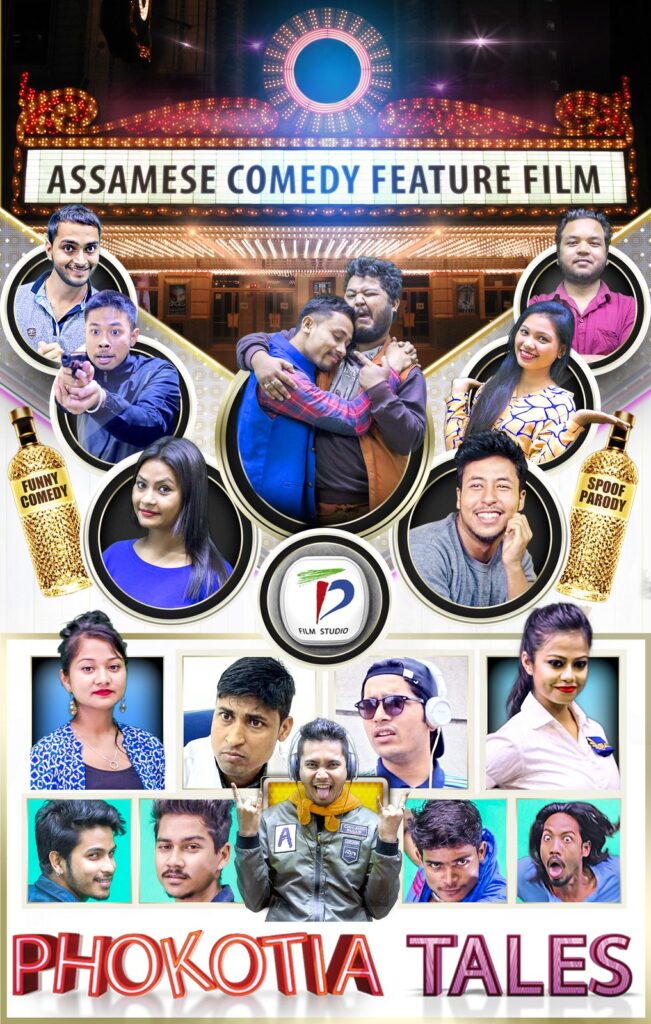
    Phokotia Tales is an Assamese comedy feature by Tarunabh Dutta of TD Film Studio, Guwahati. He wrote, directed, shot and edited it, and did its visual effects. It is a spoof of the trends and habits of young people in Assam, told through characters whose lives cross in silly situations. The full film runs 1 hour and 25 minutes and was released on YouTube on 17 September 2017.

    Watch the full film

    What the film is about

    “Phokotia” is Assamese slang for cheap, silly antics. The film laughs at them: show-offs, would-be heroes, office flirts, blind dates and lovers who try too hard.

    The twelve episodes

    Phokotia Tales began as a comedy web series. Watch the episodes on YouTube:

    • Episode 1: Shooting Star
    • Episode 2: Romeo No Juliet
    • Episode 3: Air Hostess
    • Episode 4: Bromance
    • Episode 5: Tharki Boss
    • Episode 6: Blind Date
    • Episode 7: Herogiri
    • Episode 8: Victim of Love
    • Episode 9: Fiancee
    • Episode 10: The Lover
    • Episode 11: Bromance Reload
    • Episode 12: Happy Ending

    Disco Khoini

    Disco Khoini is the comedy song from Phokotia Tales, a parody of music-video clichés. Arunav Das sings it, and Himakhi Dutta choreographed it. It has more than 46,000 views.

    A cast from the studio’s acting workshop

    Every role in Phokotia Tales is played by students of the studio’s acting workshop. The film was made to show what they had learned.

    Behind the scenes

    The making-of film follows the shoot and the edit.

    Frequently asked questions

    Where can I watch Phokotia Tales?

    The full film is free to watch on the TD Film Studio YouTube channel, and it is embedded on this page. The twelve episodes are on the channel too.

    What does “Phokotia” mean?

    Phokotia is Assamese slang for cheap, silly antics. The film pokes fun at them.

    Is Phokotia Tales a film or a web series?

    Both. It began as a twelve-episode comedy web series, and the episodes were joined into a feature film of 1 hour 25 minutes, released on 17 September 2017.

    Who acted in Phokotia Tales?

    Every role is played by students of the studio’s acting workshop.

    Who made Phokotia Tales?

    Tarunabh Dutta wrote, directed, shot and edited it, and did its visual effects.

    More from the studio

    Watch the Assamese features Adhorua and My Love is Vengeance, or see every film on our films page. To train as an actor, see our acting page.

  • My True Love (মোৰ সঁচা মৰম): Assamese Animated Romance

    My True Love (মোৰ সঁচা মৰম): Assamese Animated Romance

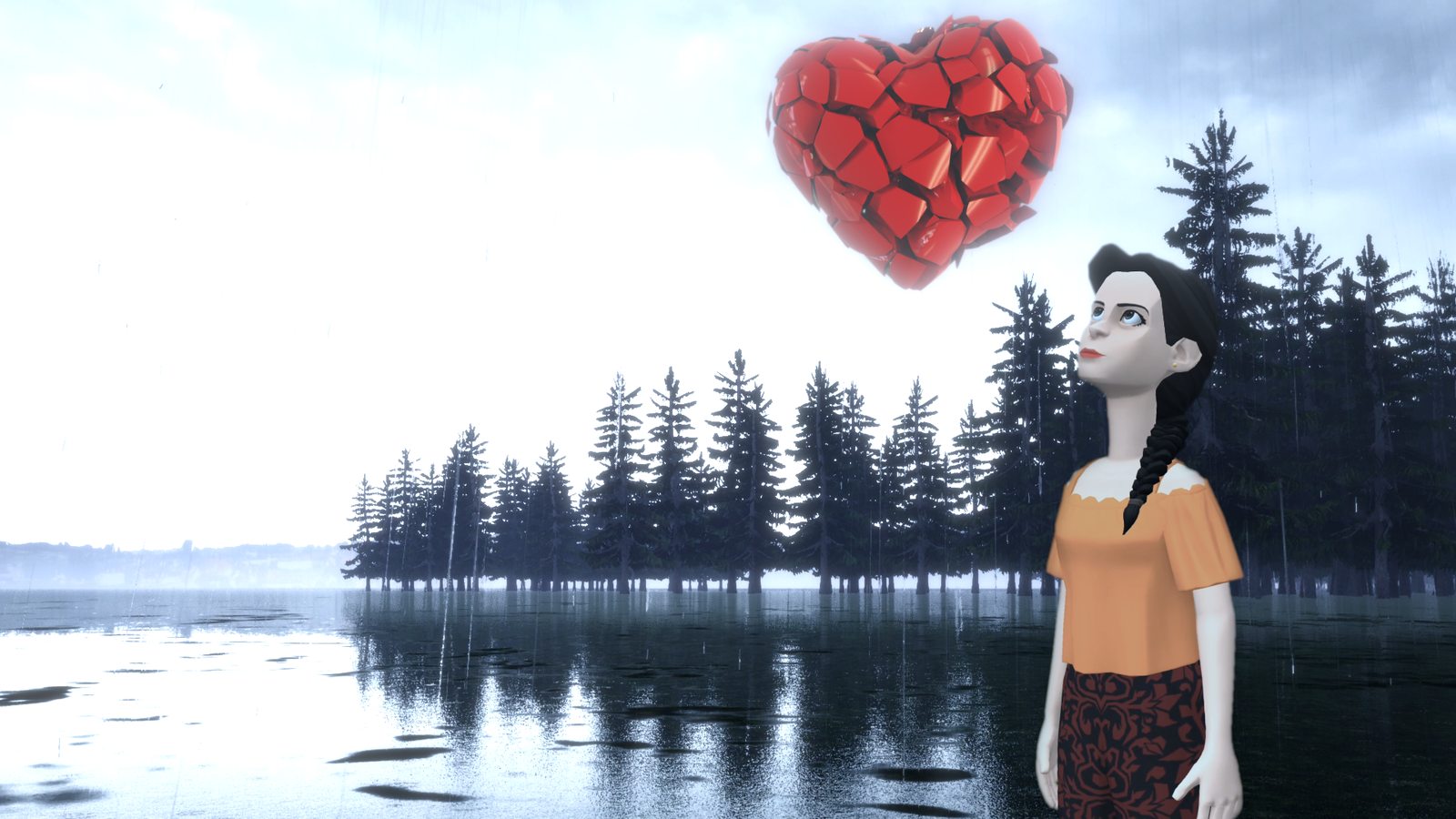
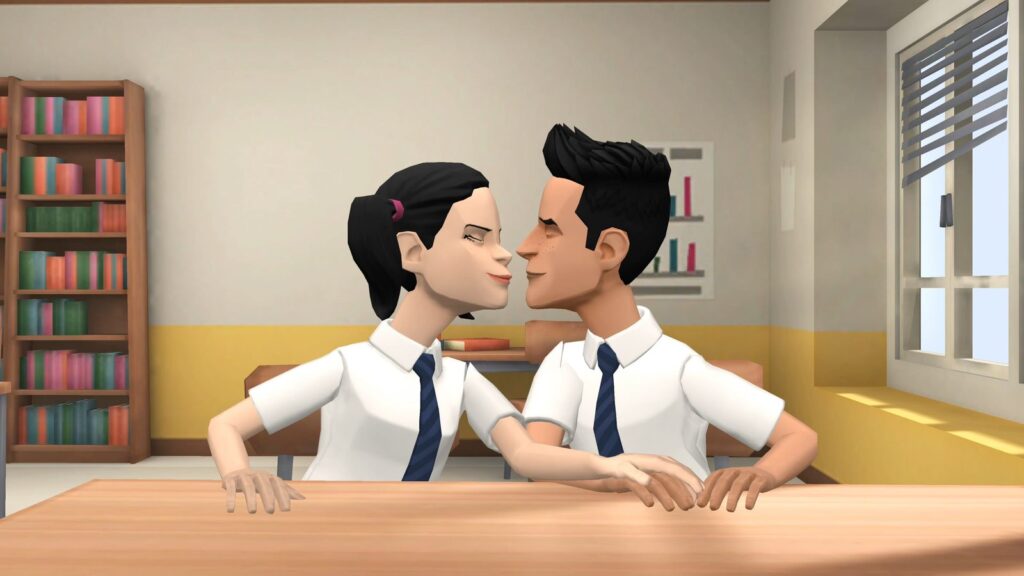
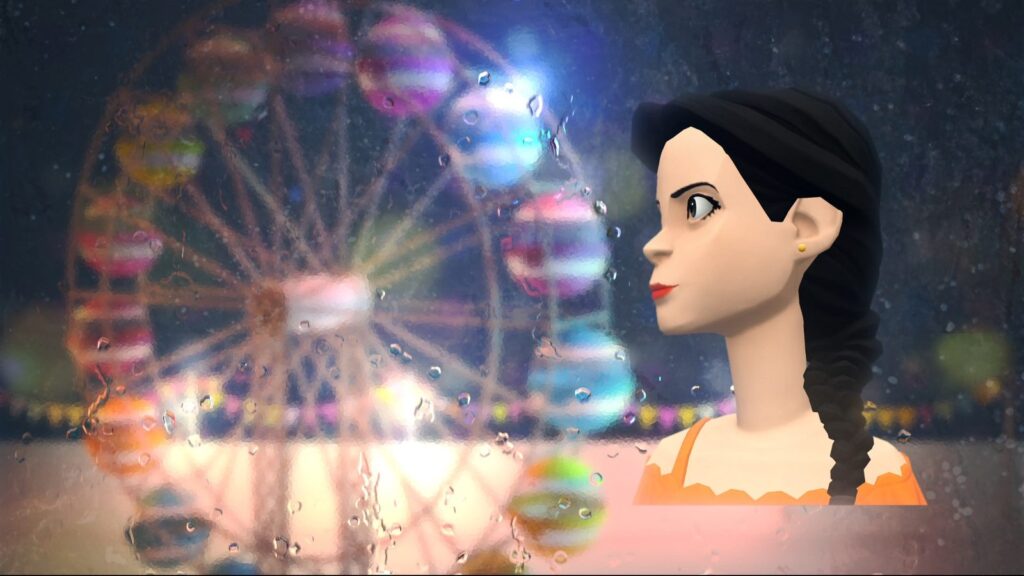
    My True Love (মোৰ সঁচা মৰম) is an Assamese animated romance by Tarunabh Dutta of TD Film Studio, Guwahati. He wrote, directed, animated, edited and produced it. It was released as an animated web series on the OTT platform Niri 9, and is described as the first Assamese animated web series. A 105-minute feature version followed in 2021. It is in Assamese with English subtitles.

    The trailer

    Watch My True Love on Niri 9.

    The story

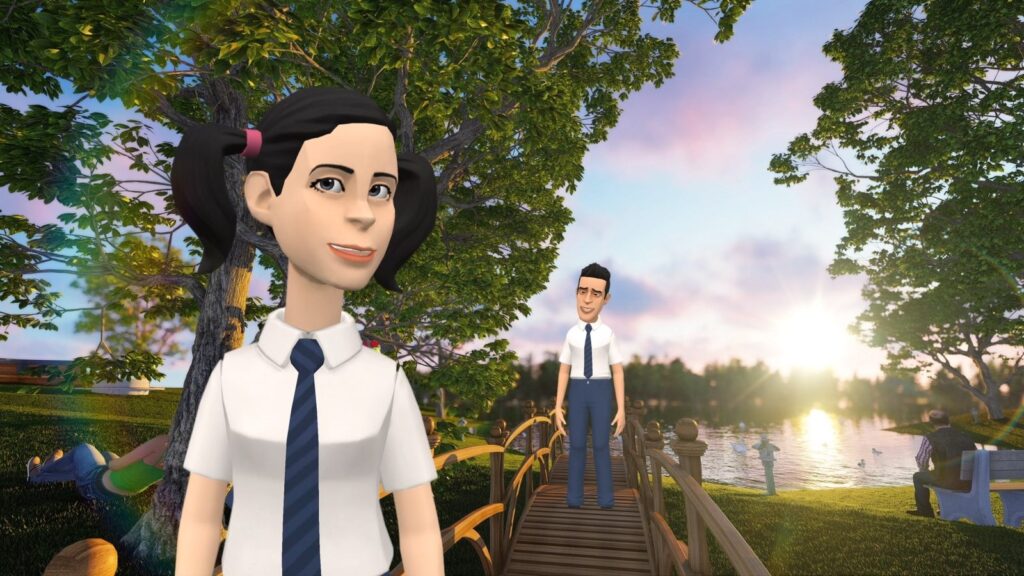
    My True Love follows Rahul and Rosy from their school days to their working lives. It is the story of a first love, and of whether it can last as two people grow up.

    Made without AI

    My True Love was made at the studio without AI tools: every scene was animated and composited by the studio team. These two breakdowns show the scenes before and after the visual effects.

    Watch part 2 of the VFX breakdown.

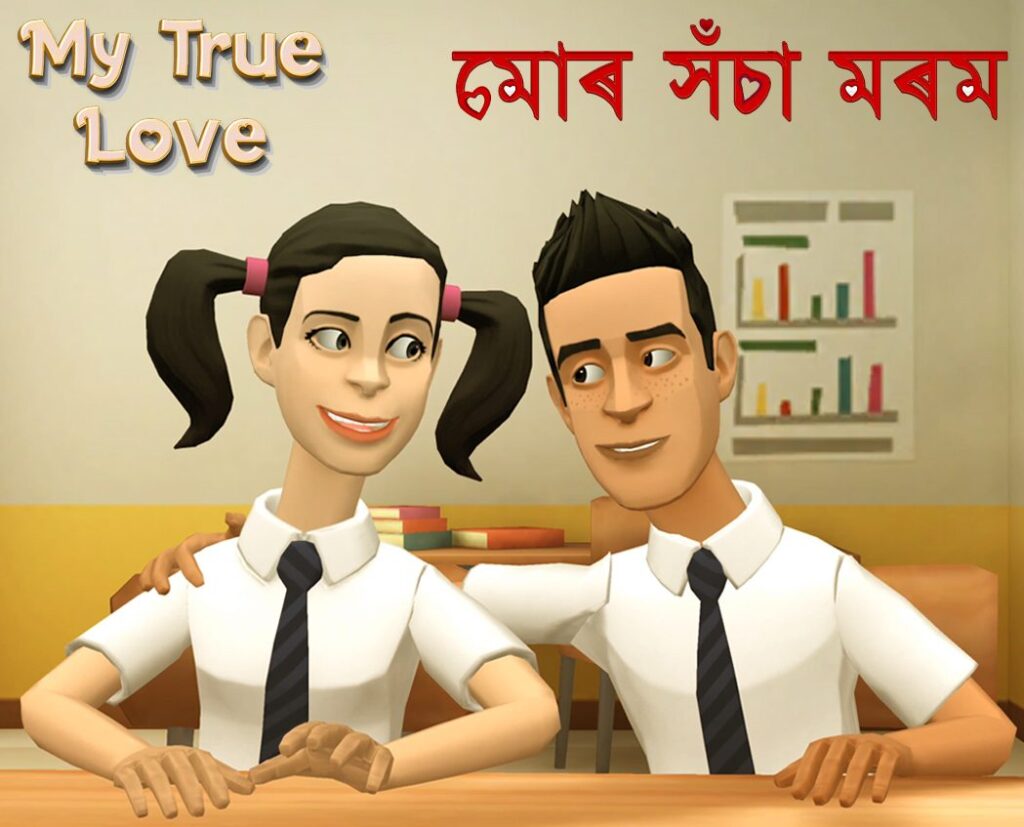
    Poster for My True Love (মোৰ সঁচা মৰম), a 2021 Assamese animated romance by TD Film Studio
    The poster

    Frequently asked questions

    Where can I watch My True Love?

    The web series is streaming on the Niri 9 OTT platform. The trailer is on this page.

    Is My True Love made with AI?

    No. My True Love was animated at TD Film Studio without AI tools.

    Is My True Love a film or a web series?

    Both. It was released as an animated web series on Niri 9, and there is also a 105-minute feature version.

    What language is My True Love in?

    It is in Assamese, with English subtitles. Its Assamese title is মোৰ সঁচা মৰম.

    Who made My True Love?

    Tarunabh Dutta wrote, directed, animated, edited and produced it, and did its visual effects.

    More from the studio

    See more of our animated video production, watch the Assamese features Adhorua and Avataran, or browse every film on our films page. To make an animated film with the studio, start a project.

  • My Love is Vengeance (বিষাক্ত প্ৰেম): Assamese Romantic Horror Film

    My Love is Vengeance (বিষাক্ত প্ৰেম): Assamese Romantic Horror Film

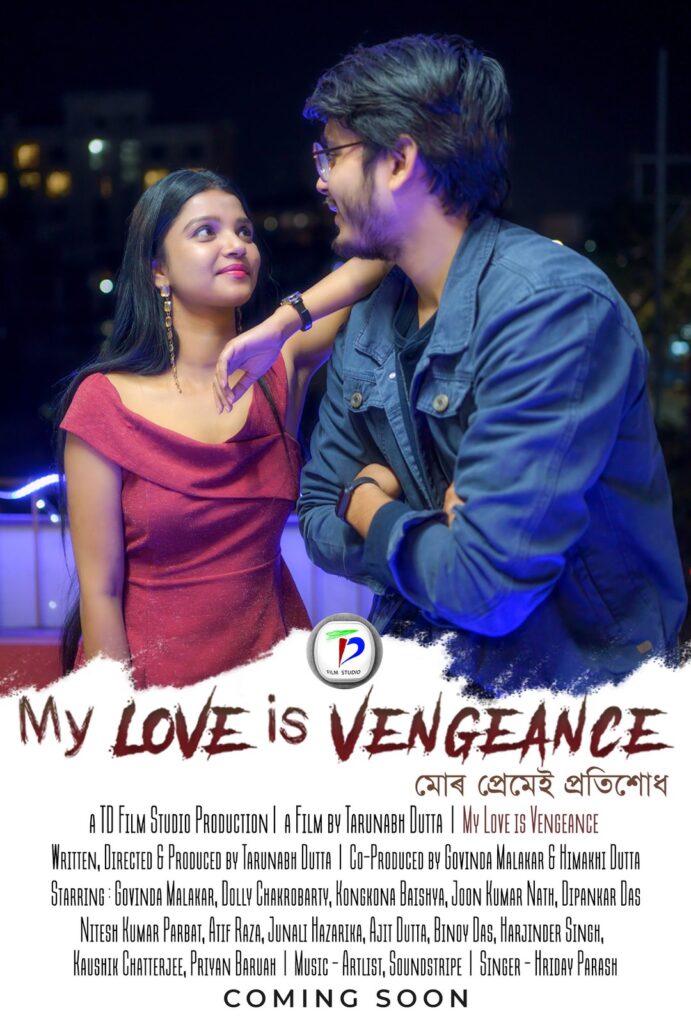
    My Love is Vengeance (বিষাক্ত প্ৰেম) is an Assamese romantic horror thriller by Tarunabh Dutta of TD Film Studio, Guwahati. He wrote, directed, shot, edited and produced it. Completed in 2022, it runs 1 hour and 31 minutes as a feature film, and the same story was released as a web series in six episodes. Kongkona Baishya plays the lead.

    Watch the full film

    The story

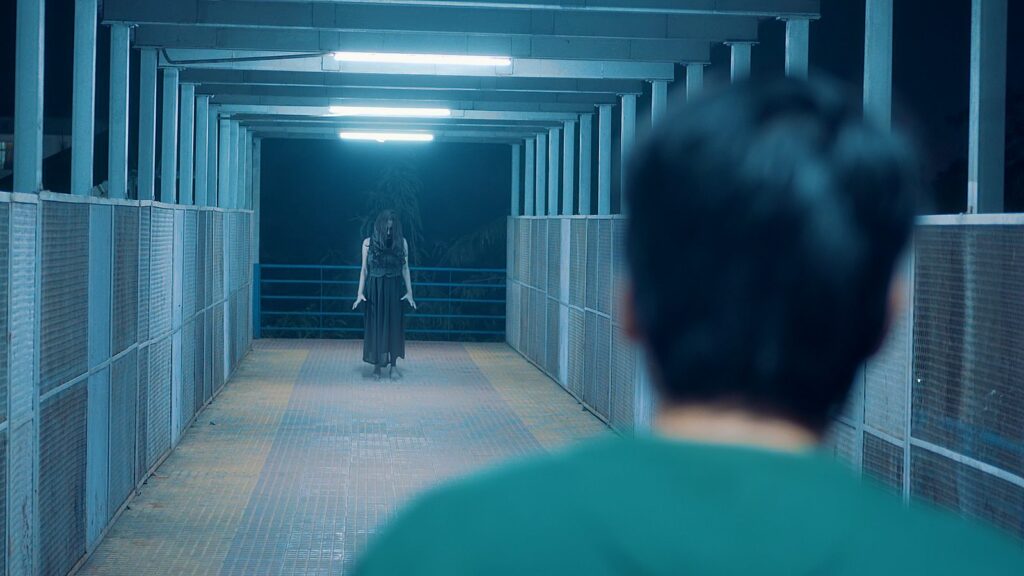
    Gautam and Mitali are aspiring actors, and they seem made for each other. Then a mysterious ring turns up on the railway tracks, and the visions begin.

    As the haunting grows, Gautam turns to his co-star Parishmita, who has secrets of her own, and to a trusted advisor. Together they try to find out what the ring means before it tears the lovers apart.

    The film is a love triangle with a horror twist: a story of love, betrayal and revenge.

    The trailer

    The web series

    The story was also released as a web series in six episodes. Watch all six episodes on YouTube.

    Cast and crew

    The cast includes:

    • Govinda Malakar
    • Dolly Chakrabarty
    • Kongkona Baishya (lead)
    • Ankita Chakravarty
    • Dipankar Das
    • Nitesh Kumar Parbat
    • Atif Raza
    • Junali Hazarika
    • With Ajit Dutta, Binoy Das, Harjinder Singh, Priyan Baruah, Tarulata Malakar, George Bordoloi, Sunita Nath, Kaushik Chatterjee and others
    • Written, directed, shot, edited and produced by Tarunabh Dutta, who also did the visual effects
    • Music: Dhiraj Dutta
    • Singers: Hriday Parash and Moni Kangkana
    • Filming support: Georgie’s Retreat Eco Camp
    Poster for My Love is Vengeance (বিষাক্ত প্ৰেম), a 2022 Assamese romantic horror thriller by TD Film Studio
    The film poster

    Behind the scenes

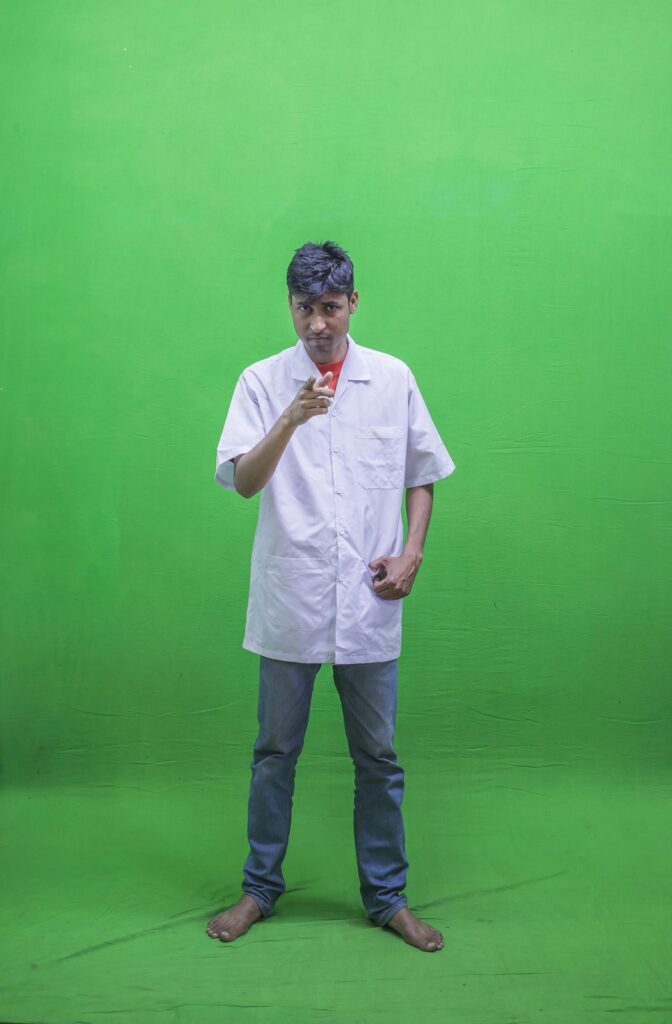
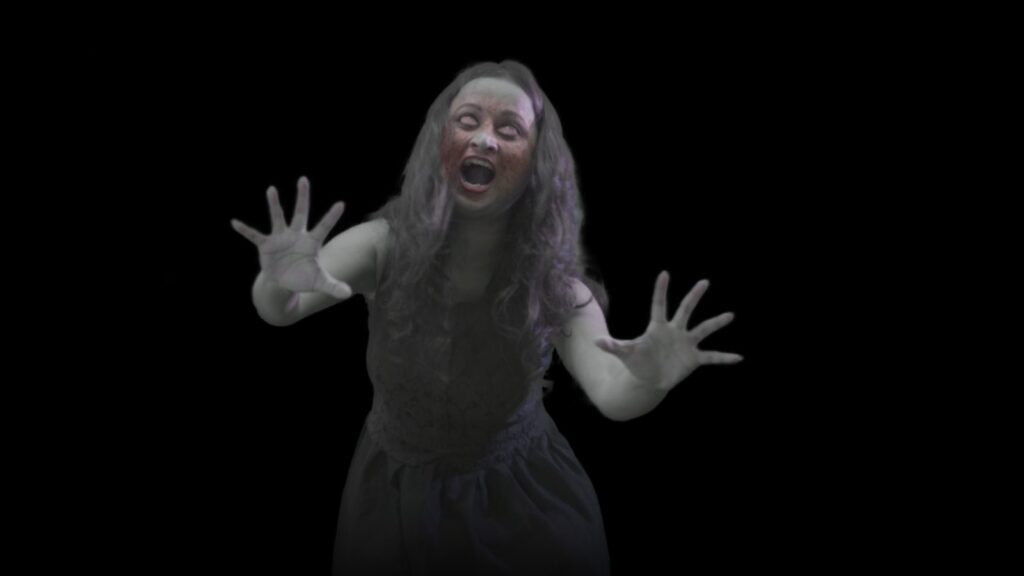
    The horror scenes were made with live-action stunts, green-screen compositing and prosthetic make-up. This breakdown shows how.

    The cast and crew also filmed their wrap-up get-together at the end of the shoot.

    Frequently asked questions

    Where can I watch My Love is Vengeance?

    The full film is free to watch on the TD Film Studio YouTube channel, and it is embedded on this page. The six-episode web series is also on the channel.

    Is My Love is Vengeance a film or a web series?

    Both. It is a feature film of 1 hour 31 minutes, and the same story was also released as a web series in six episodes.

    How long is My Love is Vengeance?

    The film runs 1 hour, 31 minutes and 31 seconds.

    What language is My Love is Vengeance in?

    It is an Assamese-language film. Its Assamese title is বিষাক্ত প্ৰেম.

    Who directed My Love is Vengeance?

    Tarunabh Dutta wrote, directed, shot, edited and produced the film. He also did its visual effects.

    Who made the music for My Love is Vengeance?

    The music is by Dhiraj Dutta. Hriday Parash and Moni Kangkana sing.

    More from the studio

    Watch the Assamese features Adhorua and Avataran, or see every feature, short film and documentary on our films page. To make a film with the team behind My Love is Vengeance, start a project.

  • Adhorua (Incomplete): The Assamese Feature Film

    Adhorua (Incomplete): The Assamese Feature Film

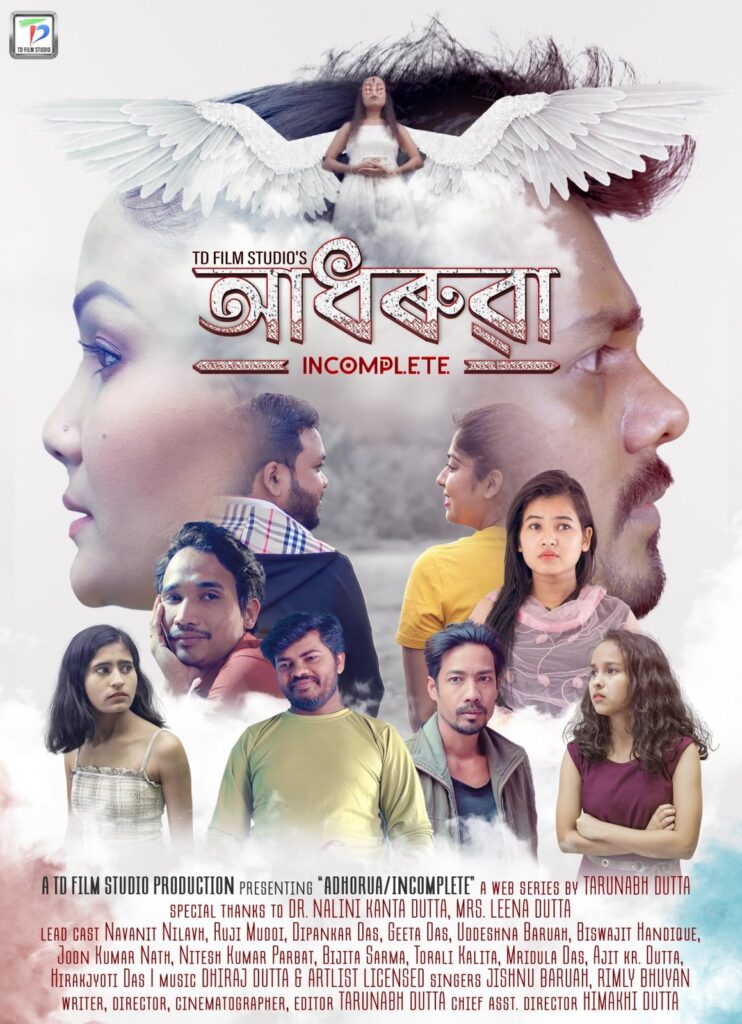
    Adhorua (অধৰুৱা, “Incomplete”) is an Assamese feature film by Tarunabh Dutta of TD Film Studio, Guwahati. He wrote, directed, shot, edited and produced it. The film mixes drama, romance, fantasy and a thriller. It runs 3 hours and 16 minutes. The full film was released on YouTube on 22 September 2024, and it has more than 109,000 views.

    Watch the full film

    The story

    A writer drowning in debt and a young heiress facing an arranged marriage are strangers. Then a freak accident kills them both.

    They wake in the world beyond. There, they are given seven days back on Earth to set their lives right. But only one of them can stay.

    The film is about the things we leave unfinished. It asks what we would give up for someone else, and what a second chance is worth.

    The trailer

    The music

    The title song was written and composed by Tarunabh Dutta. It comes in two versions: Jishnu Baruah sings the male version and Rimly Bhuyan the female one. The film’s music is by Dhiraj Dutta.

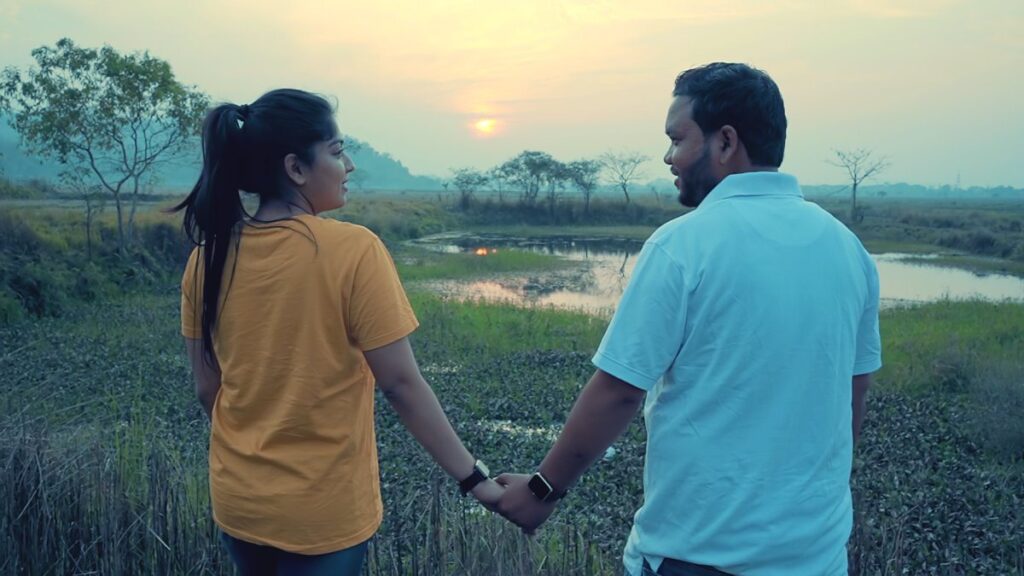
    Adhorua song still by the stream
    A song by the stream

    More of the studio’s songs are on the music page.

    Cast and crew

    Adhorua was cast with actors trained in the studio’s own acting classes.

    • Rishi: Navanit Nilavh
    • Munmi: Ruji Mudoi
    • Neha: Uddeshna Baruah
    • Deepak: Dipankar Das
    • Manash: Biswajit Handique
    • Geeta: Geeta Das
    • Chandan: Jay Kumar Nath and Nitesh Kumar Parbat
    • With Bijita Sarma, Torali Kalita, Mridula Das and others
    • Written, directed, shot, edited and produced by Tarunabh Dutta, who also did the visual effects
    • Chief Assistant Director: Himakhi Dutta
    • Music: Dhiraj Dutta
    • Playback singers: Jishnu Baruah and Rimly Bhuyan

    Behind the scenes

    The cast met again at the studio after the shoot. This short film shows the reunion.
    Frequently asked questions

    Where can I watch Adhorua?

    The full film is free to watch on the TD Film Studio YouTube channel, and it is embedded on this page.

    Is Adhorua a film or a web series?

    Adhorua is a feature film. It was released as a feature on 22 September 2024.

    How long is Adhorua?

    The film runs 3 hours, 16 minutes and 46 seconds.

    What language is Adhorua in?

    Adhorua is an Assamese-language film.

    Who directed Adhorua?

    Tarunabh Dutta wrote, directed, shot, edited and produced the film. He also did its visual effects.

    Who sang the Adhorua title song?

    Jishnu Baruah and Rimly Bhuyan sing the male and female versions. Tarunabh Dutta wrote the lyrics and the tune.

    More from the studio

    Watch the science-fiction feature Avataran, the romantic horror thriller My Love is Vengeance, the animated romance My True Love or the comedy Phokotia Tales, or see every feature, short film and documentary on our films page. To make a film with the team behind Adhorua, start a project.