
2D animation
2D animation services, story first
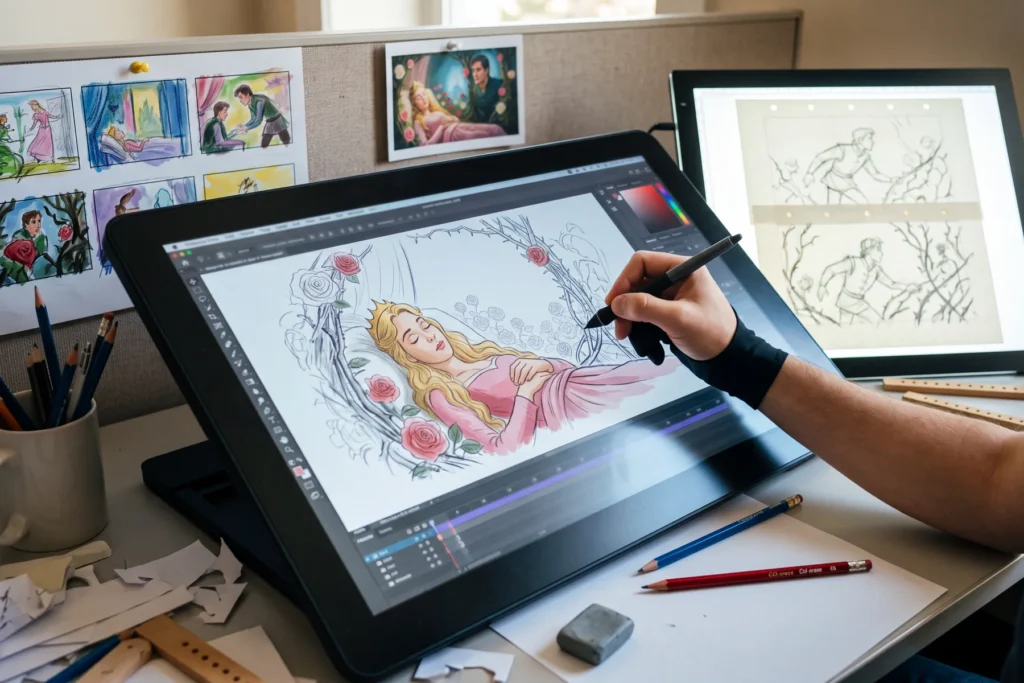
Illustrated, character and motion-graphic animation for brands, explainers, music videos and children’s stories, planned shot by shot by a director who has storyboarded for Disney India.
Part of animated video production · Also in this family: character animation · explainer videos · devotional films · children’s and family videos · See all 88 animated films →
What we make
2D animation services for brands, books and music
2D animation is drawn or illustrated animation on a flat plane, the look of storybooks, posters and classic cartoons. These are the 2D films we make.
2D explainer videos
Clear, illustrated films that explain a product, a policy or a process. Explore explainer videos.
Motion graphics
Animated typography, icons and data for brand films, presentations and social media.
Illustrated story films
Children’s stories, folk tales and myths told in a hand-illustrated style.
2D music videos
Illustrated worlds built around a song.
Social and advertising cuts
Short 2D animations sized for every platform.
2D and 3D together
2D characters in 3D worlds, or 3D scenes with an illustrated finish, when a film needs both.
What our 2D animation services include
Our 2D animation services cover every stage a flat, illustrated film needs: script, storyboard, style frames, character and background design, animation, voice, music and the final mix. Because one studio does all of it, the look you approve in the style frames is the look that reaches the screen.
2D animation suits explainers, children’s stories, brand films and music videos, and it travels well across languages. Tell us what you want to explain or tell, and you receive clear options for style and length with a written quote.
On the record
Drawing and design on the record
- Storyboards and character design concepts for Disney India’s Zokkomon
- Trained as an architect at Sir J.J. College of Architecture, Mumbai
- Animated features My True Love and Sleeping Beauty
- Motion graphics and visual effects for the studio’s own feature films
How we work
Planned like cinema
Good 2D animation is decided at the storyboard. The director of this studio has storyboarded for Disney India, and plans every 2D film shot by shot before a frame is animated.
The same studio also writes, records the voice, composes the music and finishes the sound, so the film arrives complete.
On the record
2D animated films from the studio
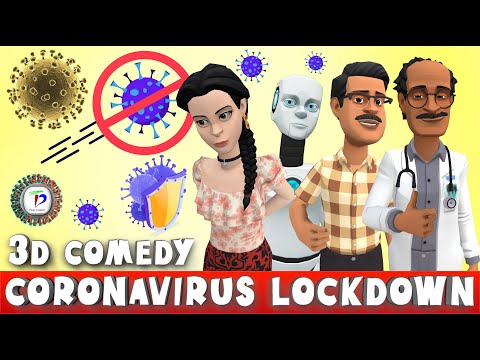
Assamese cartoon comedies written, designed, animated, voiced and scored in the studio: everyday Assam turned into short animated stories.


How it runs
How a 2D film is made
- Brief: the message, the audience and the look you have in mind.
- Script and storyboard: every shot drawn and approved.
- Style frames: the illustrated look agreed before animation.
- Animation: reviewed at the animatic and first cut.
- Finish: voice, music, sound and every version you need.
Every stage has a named review gate. See the full process.
Questions
2D animation styles, and when to use each
2D animation is not one look but a family of styles. Choosing the right one early shapes the schedule, the cost drivers and the feel of the film.
- Traditional frame-by-frame animation: every movement drawn by hand. The richest and most expressive style, best for emotional stories, music videos and title sequences.
- Rigged (cut-out) 2D animation: characters built from jointed parts and animated like puppets. Consistent and efficient for series, explainers and recurring brand characters.
- Illustrated storybook animation: painted scenes with gentle movement and camera moves. Ideal for children’s stories, fairy tales and devotional narratives.
- Motion graphics: animated type, icons, charts and shapes. Best for data, products, apps and social media.
- Whiteboard animation: a hand drawing the story as it is told. Clear for training and education.
- 2D with 3D elements: drawn characters in a 3D space or with 3D props, for depth and camera movement.
Where 2D animation works best
2D animation is at its best when an idea must be simplified, when a world cannot be filmed, or when a character needs to carry a brand or a story over many films: product explainers, children’s series, e-learning, music videos, book trailers, festival greetings and mascots. Because every element is designed, a 2D film can be changed, translated and re-cut for every platform long after it is made.
What to send for a 2D project
Most 2D films can start from a one-page brief. The more of these you can share, the faster the first style frames arrive and the closer they land:
- The idea or script, even as rough notes, and the one thing the viewer should take away.
- The audience: who will watch, how much they already know, and in which languages.
- Your brand: guidelines, logos, fonts and colours, or illustrations you already own.
- References for the look: two or three picture books, posters, animated films or styles from the list above.
- Existing characters or mascots, with any rules for how they may be shown.
- Where the film will run and the date it must be ready.
No script yet? The studio writes one with you, and draws the storyboard from it. See scripts and storyboards.
Sizes, versions and files you receive
A 2D film is built from designed layers, which makes it unusually easy to adapt. When the versions are planned at the brief, they come from the same artwork rather than from a rebuild:
- Horizontal 16:9 for YouTube, websites, presentations and television.
- Vertical 9:16 for Reels, Shorts and stories, with characters and text re-laid out for the phone rather than cropped.
- Square or 4:5 for feeds.
- Short cuts of six, fifteen or thirty seconds for ads and social posts.
- Language versions with re-recorded voice and translated on-screen text, plus subtitle files. See subtitling, translation and dubbing.
- Stills of key frames and characters for thumbnails, posters and print.
Masters are delivered for the web and, where needed, for broadcast. Whether the illustration and character files are handed over for your own future use is written into the agreement before work starts.
How new tools fit into 2D work
The studio uses AI tools where they make a 2D film better or faster, always under direction. Style frames and character explorations can be developed with Nano Banana, then corrected to match the approved design. Illustrated storybook scenes can be given gentle movement and camera moves in Kling. Motion graphics, typography and compositing are finished in After Effects, and voices and music are cast, written and produced in the studio, with Suno among the tools used for music.
What the tools do not decide is the storyboard, the timing of a joke, the expression on a character’s face or the moment a scene cuts. Those come from the director, and you approve them at each review gate described on the process page.
What shapes the schedule of a 2D film
Two films of the same length can take very different amounts of time. These are the things that decide it, so you can plan your launch date honestly:
- The style. Motion graphics and illustrated storybook scenes move faster than full character acting, where every gesture and expression is animated.
- How many characters move. One presenter is quicker than a crowded scene; a cast that talks to each other needs lip sync and acting for each of them.
- How much is new. A film that reuses an approved character and world starts ahead of one that must design everything from the first sketch.
- The number of versions. Each extra length, aspect ratio and language adds layout, voice and checking time.
- How quickly reviews come back. The schedule assumes each review gate is answered on time, with one consolidated set of notes.
The delivery date is agreed in writing once the script is approved. If your date is fixed by a launch or a festival, tell us in the brief, and the plan is built backwards from it.
Getting the most from a 2D film
- Design the character for the whole series. A mascot that will appear in many films deserves a locked character sheet. See character animation services.
- Write for the eye. Let the pictures carry what the voice need not say; a 2D film with every idea spoken aloud feels like a slideshow.
- Keep on-screen text short. Few words, large type, and room for translated text, which often runs longer than English.
- Approve the style frames carefully. They are the last easy moment to change the look; once animation begins, every change touches every shot.
- Think beyond the first upload. Because every element is designed, the same artwork can later serve a festival greeting, a sequel or a trailer. See trailers and teasers.
Ready to begin? Start your 2D film, or browse more animated work on films.
2D animation terms, in plain words
These are the words you will meet in a 2D quote, a schedule or a review note.
- Storyboard: the film drawn as a sequence of panels, one or more per shot, showing framing and action.
- Animatic: the storyboard timed to the voice and temporary sound, so the length and rhythm can be judged before animation begins.
- Style frame: one finished still that shows exactly how the film will look.
- Character sheet: a character drawn from several angles, with expressions and colours, so it looks the same in every shot.
- Keyframes and in-betweens: the key poses of a movement, and the drawings that fill the motion between them.
- Rig: a character built from jointed parts so it can be moved like a puppet, as in cut-out animation.
- Lip sync: mouth shapes matched to each spoken sound.
- Compositing: combining characters, backgrounds, effects and text into the final image.
- Frame rate: how many images play each second. Many hand-drawn movements are animated on every second frame, which gives the classic drawn feel.
- Master: the finished, approved film from which every version is made.
A one-minute 2D explainer, stage by stage
Here is how a typical one-minute illustrated explainer moves through the studio. The example is generic, but the stages are the ones every 2D film follows.
- The brief. A new service needs explaining to customers who have never heard of it. The brief fixes one message, the audience, the languages and where the film will run.
- The script. Roughly 130 to 150 spoken words fit comfortably into a minute. They are written, read aloud for timing, and approved.
- The voice. The voice is cast and recorded early, so the animation is timed to a real performance rather than a guess.
- Storyboard and animatic. Every shot is drawn and timed to the voice. You see the whole film, roughly, before any final artwork is made.
- Style frames. Two or three finished stills set the look of the characters, colours and type, and you approve one.
- Animation. Characters, icons and text are animated shot by shot, and the first cut is shared for notes.
- Finish. Music, sound effects, the mix, subtitles and the agreed versions are made from the approved master.
At each stage you answer one review gate with one set of notes. Changes are easiest at the script and the animatic, and hardest once animation is under way, because a change then touches every shot that follows.
How to judge a 2D animation showreel
A showreel is edited to impress, so look past its best two seconds. When you compare studios, ask:
- Is there a whole film? A complete piece, with a beginning and an end, shows storytelling, not just moments.
- Do the characters act? Look for weight, timing and expression, not only movement.
- Does the look stay consistent? A character should look the same in every shot and from every angle.
- Is the sound finished? Voice, music and effects should feel designed, not added at the end.
- Does the range match your film? A reel of motion graphics says little about character animation, and the reverse.
- Who made what? Ask which parts the studio made itself and who its collaborators were.
The studio’s complete 2D films, including its Assamese cartoon comedies, are on this page; more animated work is on films, and the full record of the studio’s work is on the portfolio.
Captions and accessible 2D films
2D films are often watched on phones with the sound off, and by viewers who are deaf or hard of hearing. Subtitle files for closed captions can be delivered with each master, and on-screen text is designed in large, high-contrast type and held long enough to read.
Where a film carries important information, such as a health message, a safety step or a public notice, plan the captions at the script. Then the words on screen and the words spoken support each other instead of competing, and the film still makes sense to someone who only reads it.
Questions about 2D animation
What is 2D animation?
Animation made on a flat plane: drawn, illustrated or built from graphic shapes, rather than modelled in three dimensions. It includes hand-drawn character animation, cut-out animation and motion graphics.
How much does 2D animation cost per minute?
It depends on the style, how many characters move, and how much detail each frame carries. Motion graphics cost less per minute than full character animation. You receive clear options with a written quote.
Is 2D animation cheaper than 3D?
Not always. Simple 2D is usually quicker to produce, but detailed character animation in 2D can take as long as 3D. We recommend the style that serves your film and budget best.
Can you match our brand style?
Yes. Send your brand guidelines and we will build the illustration style and colour palette around them.
Related services
- Animated video production: brand, explainer and story films
- Character animation services: characters designed and performed
- Commercials and corporate films: TV commercials, digital ads, and brand, training, event and institutional films
- All services: post-production, VFX, music, subtitling, teaching and more
- The studio on YouTube: films, song-films and devotional cinema
Plan your 2D film
Tell us what you want to explain or tell. You will hear back within one working day.