
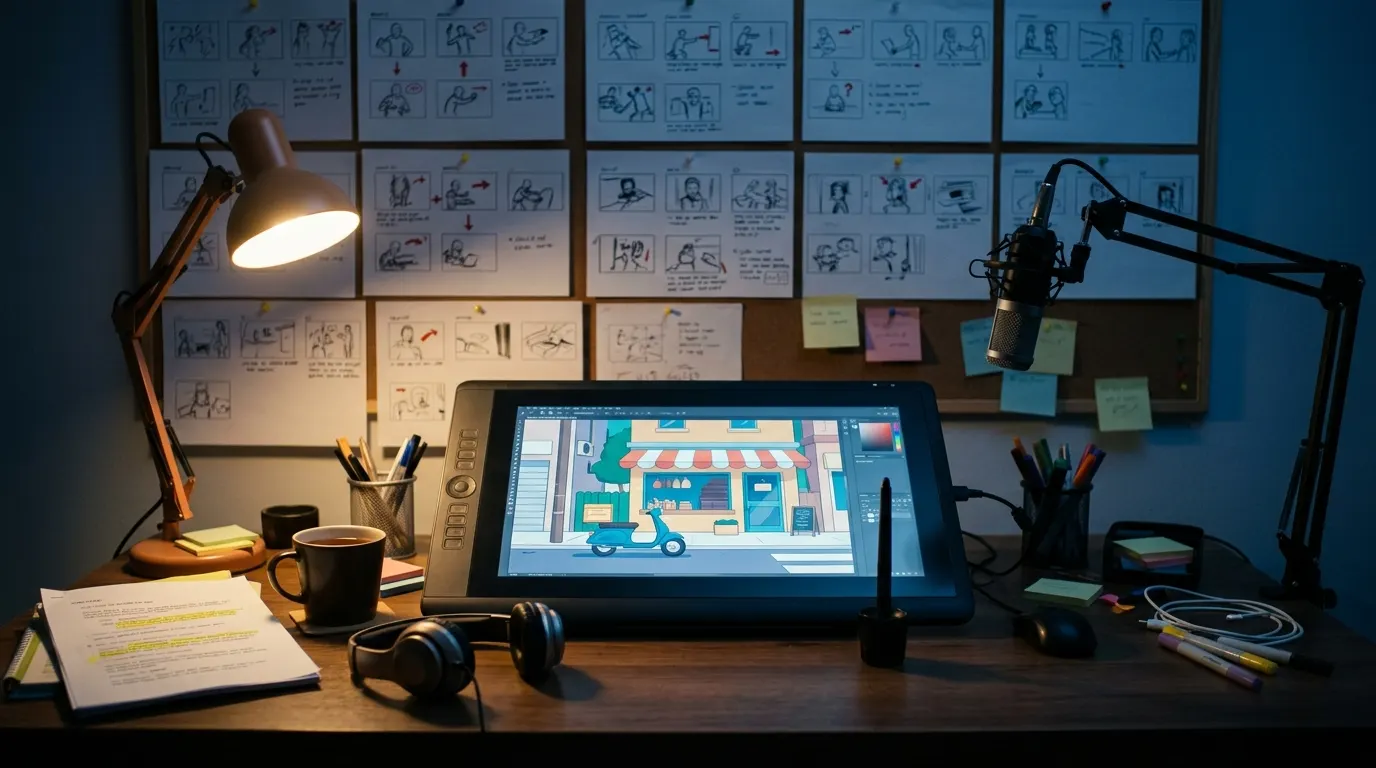
Explainer video cost per minute is the first number most buyers ask for, and on its own the least useful one. Two explainers of exactly the same length can differ several times over in the work they need. This guide explains what actually drives the price of an animated explainer video, how to bring the cost down without losing quality, and what to send a studio so you get an accurate quote the first time.
Why explainer video cost per minute is a misleading measure
A minute is a container, not a measure of work. One minute of animated text on a coloured background might take a few days. One minute of hand-animated characters who walk, talk and react can take weeks. Both are “a one-minute explainer”.
Shorter is not always cheaper, either. A 30-second version of a 90-second story has to say the same thing in a third of the time, which often means more design and more revisions, not fewer. That is why a good studio prices the project, not the clock.
Length still matters, as a starting point. Most explainers run between 60 and 90 seconds. Narration is usually read at around 130 to 160 words a minute (a typical speaking rate), so a 60-second script is roughly 140 to 160 words. Every extra line of script is extra animation.
What really drives explainer video cost per minute
1. The script
Everything else follows from it. A clear script with one message and one call to action is quicker to design and animate than a script that tries to explain five products. If the studio writes the script, research and drafting are part of the work; if you supply it, the studio still needs time to shape it for the screen.
2. The animation style
Style is the biggest single factor. In rough order of effort:
- Kinetic typography and motion graphics: animated text, icons and shapes.
- Flat 2D illustration: designed scenes with simple movement.
- 2D character animation: characters who move, gesture and speak.
- 3D animation: modelled, textured and lit worlds and characters.
Each step up adds drawing, rigging and animating time for every second on screen.
3. Characters and scenes
Every new character must be designed and prepared for animation, and every new scene must be drawn. Lip-sync, where mouths match the voice, adds time to each line of dialogue.
4. Voice-over and languages
A professional voice is recorded and edited to the picture. Each additional language means a new recording and new timing, and on-screen text may have to be redrawn. Subtitles are a lighter alternative.
5. Music and sound
Licensed stock music is the lighter option; an original score composed for the film is the heavier one, and is yours alone. Sound design, the small effects that make movement feel real, adds polish at modest cost.
6. Revisions and approvals
Changes are cheap at the script and storyboard stage and expensive after animation. The number of review points is one of the most important things to agree before work starts.
7. Versions and delivery
A single 16:9 master is the base. Short cutdowns for social media, vertical 9:16 and square versions, and subtitled versions are each additional work.
8. Schedule
A comfortable schedule lets a studio plan; a rush job needs more people working at once.
How to lower the cost without lowering quality
- Lock the script before the storyboard begins, and the storyboard before animation.
- Choose the simplest style that carries your message. Not every explainer needs characters.
- Keep it short. One message, said well, beats three said quickly.
- Plan a series together, so characters, backgrounds and music can be reused.
- Decide your languages and versions at the start, not after delivery.
- Name one person to give feedback, so notes do not contradict each other.
What to send for an accurate quote
- What the video must do, and who will watch it.
- The length you have in mind, and where it will run: website, social media, a trade show, television.
- Two or three reference videos you like, and what you like about them.
- Languages and versions you need.
- Your deadline.
- Your budget, if it is fixed. A studio can then tell you honestly what is achievable within it.
TD Film Studio does not publish a price list, because explainers of the same length can need very different work. Instead you receive clear options and a written quote, with the deliverable and the schedule agreed in writing before work starts.
How we make animated explainer videos
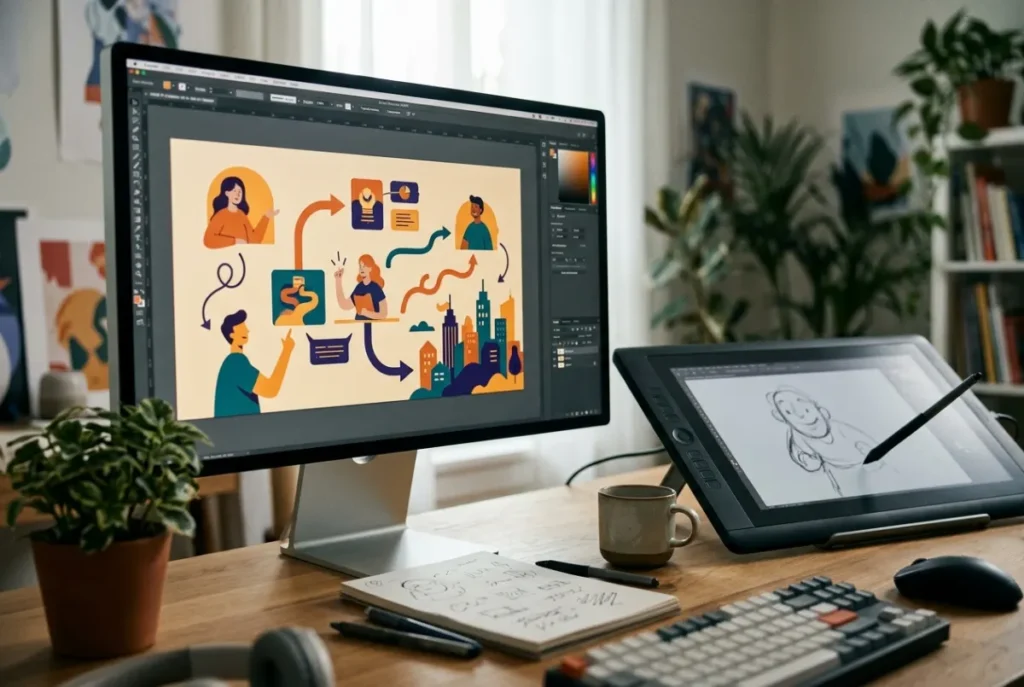
Every animated explainer video at TD Film Studio follows the same production process: brief and scope, script, storyboard and animatic, animation, voice and music, and delivery. One director carries the film through every stage, so the person you brief is the person who answers at each review.
Questions about explainer video cost
How long should an explainer video be?
For most products and services, 60 to 90 seconds. Short versions of 15 to 30 seconds work well as social media cutdowns of a longer film.
Is 2D animation cheaper than 3D?
Usually, because 3D needs models, textures and lighting before animation begins. But a detailed 2D character film can take more work than a simple 3D product animation. See 2D animation services for more.
How long does an explainer video take to make?
A short explainer can take a few weeks from brief to delivery. The schedule is agreed in writing before work starts.
Do you charge per minute?
No. Each explainer is quoted as a project, from the brief, so you pay for the work your film needs rather than for its running time.
Get a quote for your explainer video
Tell us what you want the video to do. You will hear back within one working day with real questions about your film. Start a project.