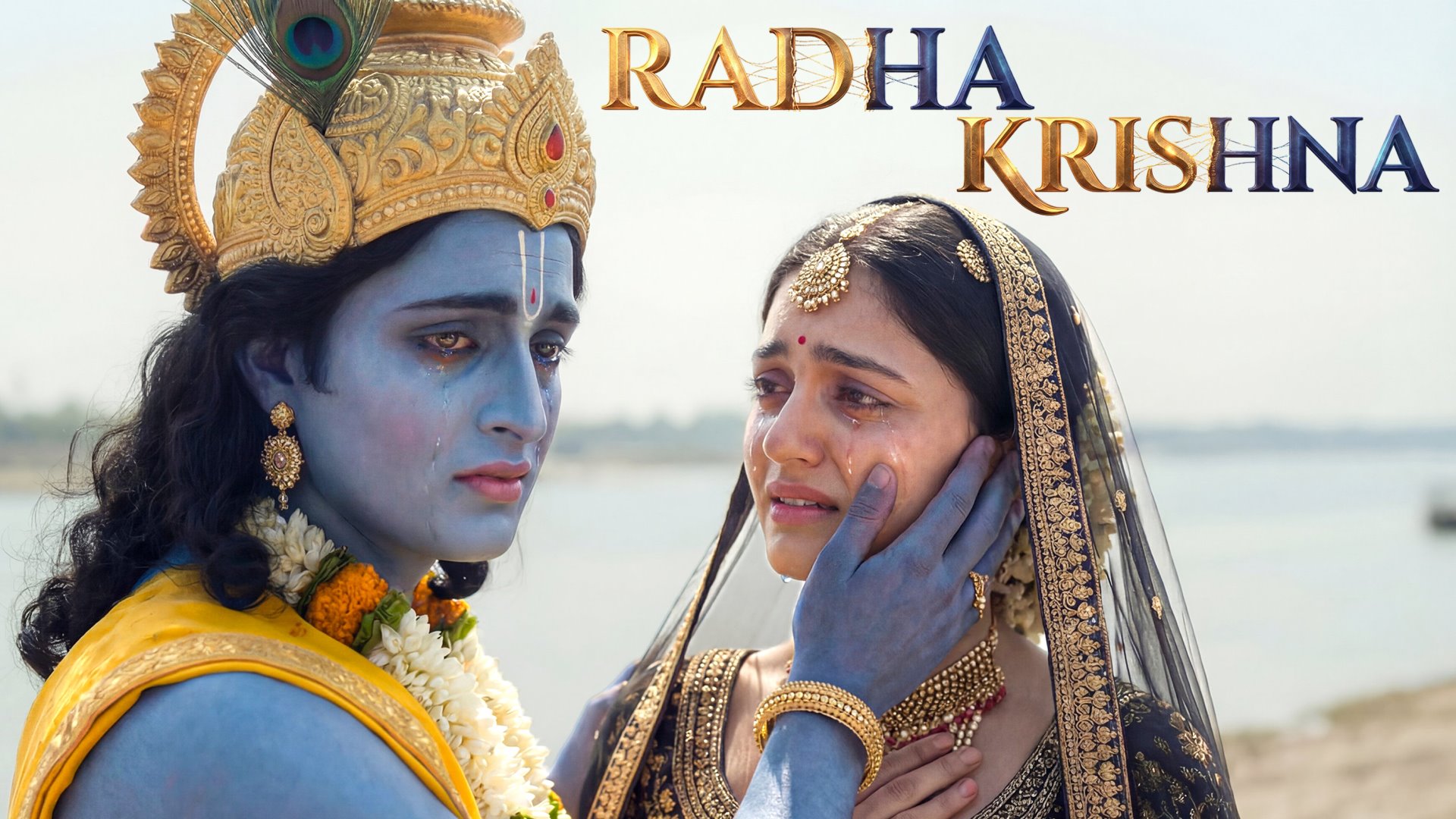
Beyond Ritual: How Stories Plant the Seeds of True Transformation
We are living in an age of profound spiritual blindness. We see the motions of faith—the rituals, the donations, the recited prayers—but the heart is often absent. Our world has mastered the outward form of religion but has tragically forgotten its inner essence. In this age of digital noise and deep-seated cynicism, telling people what to believe is a failed strategy.
The most powerful solution is not instruction, but inspiration. The key to awakening a sleeping world lies in the universal, emotional power of storytelling. Specifically, it is the unmatched potential of audio-visual storytelling, as seen in the timeless epics of the Ramayana and Mahabharata, that offers a path forward. It is the only method that bypasses the skeptical mind to speak directly to the soul, sparking a genuine transformation that comes from within.
The Modern Dilemma: The Failure of Forced Faith and Empty Rituals
For countless people, spirituality has become a transaction. A wealthy man believes a large donation can wash away a lifetime of sin, treating salvation like a business deal. This is the core of the problem. When faith becomes a checklist of rules, instructional customs, and rituals, the heart remains unchanged.
Prescriptive methods—telling people which mantras to chant or which path is the rightful one—are destined to fail on a mass scale. For every one person who embraces these instructions with a pure heart, ninety-nine others remain untouched. Why? Because it feels like a demand or an obligation to be fulfilled, not a personal discovery. This approach only preaches to the immediate believers, leaving the vast majority of disconnected souls exactly where they are.
The Filmmaker’s Solution: How Visual Stories Awaken the Soul
This is where the unmatched power of visual storytelling comes in. A film or an animated epic doesn’t force a lesson; it invites an experience. The effectiveness of this method lies in a simple, profound process that explains how to tell transformative stories.
Emotional Engagement: The Gateway to the Heart
First, people are drawn to a story for its surface beauty, its characters, and its sense of adventure. Whether it’s a feature film, a short, or a web series, the audience lets its guard down to simply enjoy the experience. This emotional engagement in film is the crucial first step, opening a direct channel to the heart that bypasses the logical, often cynical, mind.
Subconscious Absorption: Planting Seeds of Moral Clarity
While the viewer is emotionally engaged, the deeper truths of the narrative are absorbed without resistance. Moral clarity through stories isn’t taught; it’s felt. The virtues of the protagonists and the consequences faced by the antagonists register subconsciously and naturally. This is the stage of subconscious absorption, where seeds of wisdom are planted.
The “Aha!” Moment: Self-Discovery as the Ultimate Goal
The most critical step is that the dawning of realization “comes of its own accord.” It feels like a personal epiphany, a truth unearthed from within. This is the “Aha!” moment. A lesson you teach yourself is one you never forget. A truth you discover for yourself is a thousand times more powerful than one you are told to believe.
AI-driven animation like “Shri Krishna Leela” brings mythological stories to a new generation.
A Tale of Two Paths: Individual Peace vs. Global Healing Through Film
To truly grasp the superiority of this method for widespread impact, we can contrast two noble approaches to fostering spirituality.
- The Inward Path: Offering verbal guidance or financial support to individuals, encouraging them to dedicate their time to chanting. If embraced from the heart, this is a beautiful method for fostering deep, personal peace. However, its focus is on the intensive transformation of a single individual. It is deep, but narrow.
- The Outward Path: My method as a visual storyteller is different. It is wide and outward-reaching, designed for global transformation. While the inward path builds a sanctuary for one, a single visual story can build a boat sturdy enough to carry millions. Its purpose is to create a spark of goodness so potent that it becomes “contaminating,” spreading light across an entire society. It is one of the only approaches with the scale and accessibility needed to address a planetary crisis of spiritual blindness, leveraging the modern tools of independent filmmaking in India to reach a global audience.
Case Study: Why Sponsored Devotion Fails Where Storytelling Succeeds
To understand why storytelling is uniquely powerful, it is useful to analyze a contrasting approach: offering financial incentives for spiritual commitment. This method, though born from a noble desire, is burdened by flaws that limit its effectiveness for widespread change.
Flaw 1: The Trap of Transactional Motivation
The core issue is that it links a sacred, internal act to an external, financial reward. The inspiration risks coming “not from a self-realization” but from the sponsored arrangement. This creates a fragile dependency where devotion may be conditional, turning a spiritual journey into a transaction.
Flaw 2: The Limits of Individual Impact
By its nature, this method’s influence is confined to the few individuals who can be personally supported. It is an inwardly focused path designed to foster contentment for the sponsored practitioner, but it is not a scalable solution for a global problem. It has no mechanism to reach the millions who are cynical, distracted, and lost.
Flaw 3: The Absence of a Genuine “Why”
This is the most fatal flaw. The method enforces the action but cannot guarantee the transformation of the heart. True, lasting change is sparked by an emotional connection where enjoyment becomes the “very vehicle for their transformation.” A sponsored practice risks creating mechanical repetition, bypassing the crucial step where good thoughts “register subconsciously and naturally” because a person is moved by a story. It provides the what but fails to inspire the intrinsic why.
The Ultimate Solution for a Skeptical World: Storytelling as a Universal Language
The language of visual storytelling is universal. It “goes well beyond the boundaries of religion, race, countries.” It requires no knowledge of Sanskrit or sacred texts—only a willingness to watch and to feel. This is particularly true for the role of mythology in modern cinema, where ancient wisdom can be repackaged for a new generation.
We must stop trying to lecture a world that has stopped listening. Instead, we must tell stories that make them feel. At TD Film Studio, we are pioneering this by merging traditional filmmaking with cutting-edge AI animation for mythology, creating visual experiences so beautiful they awaken the dormant divinity within. In a world drowning in empty rituals, we do not need more rules. We need more feeling and better awareness. Visual storytelling is the ultimate solution for our time.
About the Author: Tarunabh Dutta, a Pioneer in Mythological Storytelling
Tarunabh Dutta is a visionary filmmaker, generative AI expert, and the founder of TD Film Studio. With over two decades of experience in the Indian film industry, he has directed and produced more than 50 diverse projects, from feature films to pioneering web series. Tarunabh is renowned for creating Assam’s first science fiction feature film, “Avataran,” noted for its extensive use of in-house CGI and VFX.
A trailblazer at the intersection of technology and traditional narratives, Tarunabh has been mastering AI tools since 2021. His studio, TD Film Studio, specializes in bringing mythological epics to life through innovative AI-driven animation, setting new benchmarks in Northeast Indian cinema. Through his work and his commitment to conducting filmmaking workshops, Tarunabh is dedicated to nurturing the next generation of storytellers and elevating Indian cinema on the global stage.